

Updated March 2026
Few acronyms have taken over search as quickly — or as confusingly — as AGI. For one group of readers, AGI is the biggest question in modern technology: can artificial intelligence become general enough to reason, learn and adapt the way humans do? For another group, AGI is far more immediate and practical: it is the number the IRS wants when you file your taxes.
AGI has two meanings: In artificial intelligence, AGI (Artificial General Intelligence) refers to AI that can perform any intellectual task like a human. In taxes, AGI (Adjusted Gross Income) is your total income minus deductions used by the IRS.
That split is exactly why the keyword has exploded. People searching “what is agi in ai”, “what is agi vs ai” and “nvidia agi” are asking a completely different question from people searching “where can I find my AGI from last year” or “where can I find my AGI on my W-2.” The three letters are the same. The meaning is not.
This guide is designed to answer both sides of the search wave properly. We will explain what AGI means in artificial intelligence, why Nvidia and Jensen Huang keep showing up in the conversation, how close researchers think the industry really is, and then clearly separate that from the tax definition of AGI so readers do not leave with the wrong answer.
Direct answer: In artificial intelligence, AGI stands for Artificial General Intelligence, usually meaning an AI system that can perform a broad range of cognitive tasks at or above human level, learn new skills, and transfer knowledge across domains. In tax filing, AGI stands for Adjusted Gross Income, which the IRS defines as your total income minus certain adjustments, and it appears on line 11 of Form 1040.
| Meaning of AGI | Full Form | Field | Plain-English Definition | Where It Matters |
|---|---|---|---|---|
| AGI in AI | Artificial General Intelligence | Technology / computer science | An AI system with broad, human-like cognitive ability across many tasks | AI research, Nvidia, model capability debates, future-of-work discussion |
| AGI on taxes | Adjusted Gross Income | U.S. tax filing | Your total income minus certain IRS-approved adjustments | Form 1040, e-filing verification, eligibility for some deductions and credits |
In this guide
- Why AGI is trending right now
- What AGI means in artificial intelligence
- AGI vs AI vs generative AI vs ASI
- How researchers measure progress toward AGI
- Why Nvidia and Jensen Huang are part of the story
- Are we actually close to AGI?
- What AGI could change — and the risks
- What AGI means on your taxes
- Where to find your AGI from last year
- Frequently asked questions
Why AGI is trending right now
There are really two separate stories behind the surge.
The first is the technology story. In AI circles, AGI has become shorthand for the industry’s most ambitious goal: a system that can reason across domains, learn new tasks, plan, solve problems and adapt to unfamiliar situations without being rebuilt from scratch for each job. As the AI race has accelerated, that question has become a mainstream conversation rather than a niche academic one.
The second is the tax story. In the United States, millions of filers search for AGI every tax season because tax software and e-file systems often ask for a prior-year AGI as part of identity verification. That sends people to Google with very practical queries such as “how do I find my AGI for 2024,” “where can I find my AGI from last year,” and “is AGI on my W-2.”
The important thing, especially if you are publishing around this topic, is to respect the difference between those intents. A useful article should not pretend there is only one meaning. It should answer the technology question clearly, acknowledge why Nvidia is in the mix, and then cleanly separate the tax meaning so readers searching in a hurry do not bounce back to the results page.
What is AGI in artificial intelligence?
Artificial General Intelligence is the name generally used for an AI system that is not limited to one narrow task or one narrow domain. A widely cited definition from Google DeepMind describes AGI as AI that is at least as capable as humans at most cognitive tasks.
That is the key difference. Today’s strongest AI systems can already write, summarize, code, translate, analyze images, search documents, generate audio and control software tools. But they still do those things unevenly. They are impressive in bursts and brittle in places. They can look general in a demo while failing badly on a novel task, a factual detail, a multi-step plan or an edge case in the real world.
A true AGI, by contrast, would not just be good at one benchmark or one workflow. It would need to carry understanding from one domain into another, learn unfamiliar skills with limited guidance, reason through new situations, monitor its own mistakes, and improve its performance across a wide range of cognitive work.
Put simply, current AI often behaves like a very strong specialist with surprising range. AGI would behave more like a broadly capable mind.
What would count as real AGI?
There is no single test that everyone agrees on. That is one reason the debate gets noisy. Depending on who is speaking, AGI can mean any of the following:
- An AI that can match humans across most knowledge work.
- An AI that can learn new tasks without large-scale retraining.
- An AI that can plan and act autonomously over long time horizons.
- An AI that can replace a large share of economically valuable human labor.
- An AI that can reason generally, not just imitate patterns from training data.
These definitions overlap, but they are not identical. An AI might look economically useful before it looks philosophically “general.” It might code well but still struggle with world modeling, social reasoning or learning a genuinely new skill from sparse experience. That is why headlines declaring AGI to be either imminent or impossible often say more about the definition than the technology.
Does AGI require consciousness?
Not under most technical definitions. One of the most important points in the modern AGI literature is that capability and consciousness are not the same question. In its work on AGI definitions, Google DeepMind’s “Levels of AGI” paper argues that useful AGI definitions should focus on what systems can do rather than whether they think or feel in a human way.
That means a machine could, in theory, be generally capable without being conscious, sentient or self-aware in the human sense. Many researchers see those as separate philosophical and scientific questions.
What would an AGI system need to do well?
Any serious definition of AGI usually points to a cluster of abilities rather than one magic trick:
- Transfer learning: using knowledge from one area to solve a different problem.
- Learning on the fly: improving from limited experience, instruction or feedback.
- Reasoning: making sound inferences instead of merely predicting plausible text.
- Planning: handling long chains of action without falling apart halfway through.
- Metacognition: knowing when it does not know, asking for clarification and self-correcting.
- Robustness: staying reliable outside the neat conditions of a benchmark.
The catch is that many frontier systems show pieces of these abilities, but not all of them together, and not with the stability humans expect from another human worker.
AGI vs AI vs generative AI vs ASI
One reason this topic confuses so many readers is that the AI vocabulary has become crowded. People use AI, generative AI, AGI and superintelligence as if they were interchangeable. They are not.
| Term | What It Means | Best Way to Think About It | Achieved Publicly? |
|---|---|---|---|
| AI | The broad field of machines performing tasks associated with intelligence | The umbrella term | Yes |
| Narrow AI | Systems that perform specific tasks very well | The dominant form of AI today | Yes |
| Generative AI | AI that creates text, images, audio, video or code | A powerful subset of narrow AI | Yes |
| AGI | AI with broad, human-level cognitive capability across many tasks | The major long-term goal and debate | No consensus |
| ASI | Artificial Superintelligence that exceeds human capability across the board | The hypothetical stage beyond AGI | No |
What is AGI vs AI?
AI is the broad category. It covers everything from spam filters to recommendation systems to image generators to coding assistants. AGI is a much narrower idea inside that larger category: it refers to a system with general cognitive ability, not just a specialized skill set.
So when someone asks “what is AGI vs AI”, the clean answer is this: AI is the field; AGI is the hypothetical destination.
Is AGI the same as generative AI?
No. Generative AI is what most people are already using: chatbots, image generators, voice tools, video generators and coding assistants. These systems can be astonishingly versatile, but versatility is not the same as general intelligence. A model that can write an essay, summarize a PDF and generate code may still fail at long-horizon reasoning, factual stability, or learning a truly new skill the way a person can.
What is the difference between AGI and ASI?
AGI is usually taken to mean roughly human-level general intelligence. ASI, or Artificial Superintelligence, goes beyond that. In the DeepMind levels framework, superhuman general AI sits at the far end of the spectrum: a system that outperforms humans broadly, not just in a few narrow tasks.
How researchers measure progress toward AGI
The honest answer is that the field is still trying to build a common measuring stick. That is not a side detail. It is the heart of the problem.
A recent Google DeepMind paper from 2026 says plainly that there is still no clear framework for measuring progress toward AGI, and that this ambiguity fuels subjective claims, makes progress harder to track and complicates governance.
That same framework breaks cognition into 10 broad faculties: perception, generation, attention, learning, memory, reasoning, metacognition, executive functions, problem solving and social cognition. The point is not to sound academic. The point is to show that “general intelligence” is not one skill. It is a bundle of capabilities that need to be tested across very different kinds of tasks.
The “Levels of AGI” framework
One of the clearest attempts to bring order to the debate came in the 2024 paper “Levels of AGI for Operationalizing Progress on the Path to AGI”, which proposed a scale similar in spirit to levels of driving automation.
| Level | Name | Human Benchmark | What It Means for General AI |
|---|---|---|---|
| Level 0 | No AI | No meaningful autonomous intelligence | Traditional software, calculators, simple tools |
| Level 1 | Emerging | Equal to or somewhat better than an unskilled human | Broad but uneven performance; strong in some tasks, weak in many others |
| Level 2 | Competent | At least the 50th percentile of skilled adults | The level many people really have in mind when they say AGI |
| Level 3 | Expert | At least the 90th percentile of skilled adults | Broad, highly reliable human-expert capability across domains |
| Level 4 | Virtuoso | At least the 99th percentile of skilled adults | General AI performing at elite human level almost everywhere |
| Level 5 | Superhuman | Outperforms all humans | Artificial superintelligence |
That paper made another point that gets lost in popular coverage: today’s public frontier systems are still uneven. The authors argued that language models could show competent performance on some narrow tasks, such as short essay writing or simple coding, while still landing overall in an “Emerging AGI” bucket because they fall short across most tasks more broadly.
That is a much more realistic way to read the current moment. The systems are not trivial. But neither are they cleanly “there.”
Why the definition matters so much
If you define AGI as a system that can generate useful work across many white-collar tasks, the gap looks smaller. If you define AGI as a system that matches humans across most cognitive tasks with reliability, transfer learning, self-monitoring and real-world robustness, the bar is much higher.
That is why the conversation can sound contradictory. Two experts can look at the same model and disagree sharply while both speaking in good faith. They are often using different thresholds.
Why is “Nvidia AGI” trending?
Nvidia appears in AGI searches for a simple reason: even when it is not building the leading public chatbot itself, it sits near the physical center of the AI boom.
The company’s chips, systems and networking gear are part of the infrastructure that trains and runs many of today’s frontier AI models. At GTC 2026, Nvidia framed the event around breakthroughs across the AI stack, and its conference coverage underscored how closely investors and developers now associate Nvidia with the next phase of AI capability.
So when people type “Nvidia AGI” or “Nvidia CEO AGI”, they are usually asking one of three things:
- Is Nvidia itself building AGI?
- What has Jensen Huang said about AGI?
- Will Nvidia benefit if the industry gets closer to AGI?
Does Nvidia build AGI?
Not in the narrow sense most readers mean. Nvidia is not selling a public product that can straightforwardly be described as “the AGI.” Its importance is infrastructural. It builds the hardware and platforms that many AI developers rely on to train and deploy advanced systems.
That makes Nvidia central to the conversation without making it the sole owner of the outcome. The race toward more general AI is spread across model labs, cloud providers, chip makers, researchers, application companies and open-source ecosystems.
What has Jensen Huang said about AGI?
Jensen Huang has long argued that the timeline depends on the definition. In a 2024 Reuters interview, he said AGI could, by some definitions, arrive in as little as five years if the benchmark was passing a wide range of human tests. But he also said that by other definitions AGI could be much farther away because scientists still disagree on what human-like intelligence really entails.
That is a useful way to interpret the noise around recent AGI headlines. Huang’s comments matter because Nvidia is so deeply linked to the AI buildout. But even his argument has usually come with the same caveat serious researchers keep returning to: define the target first.
Why Nvidia shows up even in basic “what is AGI” searches
Because the story is no longer academic. AGI is now part technology debate, part infrastructure race, part corporate strategy story and part market story. Nvidia sits at the intersection of those worlds. When people search the term after a keynote, an earnings cycle, or a widely shared interview, they are often trying to connect the abstract question of AGI to a company they already know is shaping the AI economy.
Are we actually close to AGI?
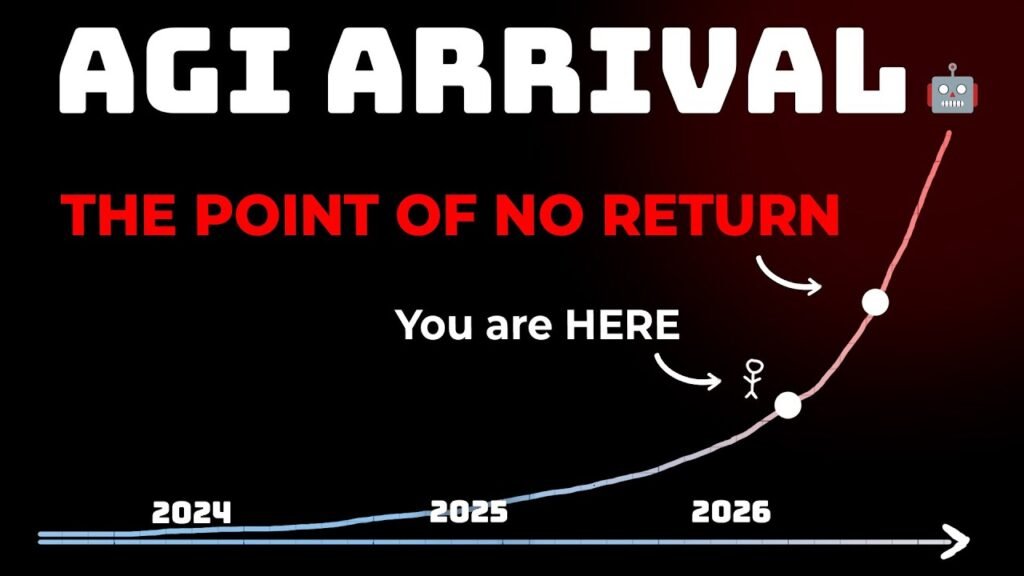
The most responsible answer is this: we are clearly closer than the industry seemed a few years ago, but there is still no broad consensus that public systems have reached AGI.
The optimistic case is easy to see. Modern AI systems already write decent code, explain complex documents, reason through some multi-step problems, generate text and media across formats, use tools, and increasingly act as agents inside software. They are becoming more multimodal, more interactive and more useful.
The skeptical case is just as important. Those same systems can still hallucinate, misread context, fail on subtle reasoning, perform inconsistently across repeated attempts, struggle to learn truly new skills in a durable way and break under long-horizon autonomous tasks. In other words, they can look broad without yet being deeply reliable.
That is why many researchers resist dramatic declarations. The issue is not whether the systems are powerful. They are. The issue is whether they are broad, stable and self-correcting enough across the full range of human cognitive work to justify the label.
What current systems can already do
- Write and edit text at useful professional quality.
- Summarize large volumes of information quickly.
- Generate code and help debug software.
- Analyze images, audio and mixed media in a single workflow.
- Support research, drafting, tutoring and productivity tasks.
- Use tools, APIs and software environments with increasing competence.
What they still struggle with
- Consistent factual reliability without verification.
- Long-horizon autonomous planning in messy real-world environments.
- Transfer learning that looks more like human adaptation than prompt-based patching.
- Durable common sense and world grounding.
- Knowing when they are wrong and recovering safely without supervision.
- Stable performance across the full breadth of human cognitive tasks.
That is why the best current answer is not “yes” or “no,” but “not by any shared, settled standard.”
What AGI could change — and the risks that come with it
If generally capable AI does arrive, it will matter because it would not behave like just another software feature. It would change the economics of knowledge work, research, software production, education and decision-making.
Where AGI could have the biggest impact
Software and engineering: AI already helps draft and debug code. A more general system could take on product planning, testing, documentation, migration and routine maintenance with much less human guidance.
Science and medicine: The most hopeful case for AGI is not novelty for its own sake but acceleration — faster literature review, better hypothesis generation, stronger simulation, sharper diagnostic support and more productive research workflows.
Business operations: Many forms of analysis, reporting, customer support, procurement, compliance preparation and documentation are structured enough that increasingly capable AI systems could compress large amounts of office work.
Education: A broadly capable tutor that adapts to a student’s pace, weaknesses and language could be transformative, especially if it remains affordable and accurate.
The serious risks
Reliability risk: A persuasive model that is wrong at the wrong moment can do damage at scale.
Autonomy risk: The more capable systems become at planning and acting, the more design mistakes or misaligned incentives matter.
Labor disruption: Even before full AGI, many white-collar tasks are likely to be restructured. Some jobs will not disappear outright; they will fragment, compress or change shape.
Concentration of power: Compute, data, capital and infrastructure are not distributed evenly. If the most capable systems remain concentrated in a few firms or states, the economic and political effects could be large.
Misuse: Highly capable systems can help with good work and bad work alike, depending on how they are deployed and governed.
One theme that comes through repeatedly in serious research is that AGI is not the same thing as autonomy. A system can be highly capable without being granted broad freedom to act on its own. That distinction matters. It shapes both risk and policy.
What is AGI in taxes?
If you are not here for AI at all, this is the section you probably needed from the beginning.
In tax filing, AGI stands for Adjusted Gross Income. According to the IRS, your AGI is your total income minus certain adjustments.
This number matters because it helps determine eligibility for some credits, deductions and filing options, and it often shows up in identity verification when you e-file.
AGI in plain English
Think of your tax return in layers:
- You start with income from wages, self-employment, interest, rents, capital gains and other taxable sources.
- You subtract certain allowed adjustments.
- The result is your Adjusted Gross Income.
- After that, you apply the standard deduction or itemized deductions to arrive at taxable income.
So AGI is not the same thing as taxable income, and it is not just the wages on your W-2.
What kinds of adjustments can reduce AGI?
The exact list depends on the tax year and your situation, but common examples can include deductible IRA contributions, health savings account contributions, certain educator expenses, student loan interest, and some self-employed adjustments. The IRS explains that these adjustments flow through Schedule 1 before the AGI lands on Form 1040.
This is why people who ask “what is AGI tax” often get confused if they try to find it on a wage statement. AGI is a return-level number, not a single payroll box.
Where can I find my AGI from last year?
The IRS gives three straightforward ways to find it.
1. Look at your Form 1040
The IRS says your AGI is on line 11 of Form 1040. If you need your 2024 AGI, open your 2024 Form 1040 and check line 11. If you need another prior year, check that year’s return and confirm the line on the form you filed.
2. Check your IRS Online Account
The IRS says you can view prior-year AGI in your Individual Online Account. This is usually the fastest option if you cannot find your saved copy of the return.
3. Request a transcript
If you do not have the return and cannot access the online account, the IRS says you can request a free tax return transcript, which can also help you recover the figure.
Quick answer: If your tax software asks for last year’s AGI, the safest first check is your prior-year Form 1040, line 11. If you do not have that return, use your IRS Online Account or request a transcript.
Why tax software asks for prior-year AGI
The IRS uses prior-year AGI as part of the validation process for electronically filed returns. That is why this number becomes a breakout search term every filing season: millions of people do not think about AGI all year, then suddenly need it immediately.
What if I used a tax preparer?
If a preparer filed your return last year, they may have a copy of it. But it is still wise to keep your own PDF or printed copy because AGI is one of those small details that becomes surprisingly important at the worst possible time.
Where can I find my AGI on my W-2?
You cannot find your AGI on a W-2.
This is one of the most common AGI search mistakes. A Form W-2 reports wages, tips, other compensation and certain taxes withheld. It does not report your Adjusted Gross Income. AGI is calculated later on your tax return after the IRS-approved adjustments are applied.
That is why a W-2 can help you build your return, but it does not give you the finished AGI number by itself.
Is AGI the same as Box 1 on a W-2?
No. Box 1 on a W-2 may show wages, tips and other compensation for that employer, but AGI can include income from multiple sources and then subtract adjustments. In other words, Box 1 may be an ingredient, not the result.
Is AGI the same as MAGI?
No. MAGI means Modified Adjusted Gross Income. The IRS explains that MAGI starts with AGI and then adds back certain items depending on the tax rule involved. People often mix the two up because they sound similar, but they are not interchangeable.
AGI is the starting point. MAGI is a modified version used for specific eligibility tests in certain credits, deductions and benefits.
Frequently asked questions about AGI
What is AGI in AI?
In AI, AGI stands for Artificial General Intelligence. It refers to an AI system with broad, human-like capability across many cognitive tasks rather than a model trained for one narrow purpose.
What is AGI in artificial intelligence?
It is the same thing: Artificial General Intelligence. Most serious definitions describe it as AI that can match humans on most cognitive tasks, learn new skills and transfer knowledge between domains.
What is AGI vs AI?
AI is the umbrella field. AGI is the more specific idea of a generally capable AI. All AGI would be AI, but not all AI is AGI.
What is AGI AI meaning?
People usually mean Artificial General Intelligence when they search that phrase. They are asking about AI with broad, cross-domain reasoning rather than one specialized skill.
Is AGI already here?
There is no broad consensus that public AI systems have achieved AGI. Some experts think the gap is shrinking quickly. Others argue that current systems still lack the robustness, transfer learning and reliability needed for the label.
Does Nvidia have AGI?
Not as a simple public product you can point to and call “the AGI.” Nvidia is central because it supplies much of the infrastructure behind the AI boom, and because Jensen Huang’s comments on AGI timelines are closely watched.
Why is Nvidia connected to AGI?
Nvidia’s chips and systems are heavily used in AI training and inference. When the public debate about AGI heats up, Nvidia becomes part of the conversation because it powers so much of the current AI buildout.
What did Jensen Huang say about AGI?
Huang has repeatedly argued that the answer depends on how AGI is defined. In 2024 he said that, by some test-based definitions, AGI could arrive within five years. The broader point behind his comments is that different definitions produce very different timelines.
What is AGI in taxes?
In taxes, AGI means Adjusted Gross Income. It is your income minus certain adjustments and is a key number on your Form 1040.
Where can I find my AGI from last year?
Look at line 11 of your prior-year Form 1040, or retrieve it through your IRS Online Account or a tax return transcript.
How do I find my AGI for 2024?
Open your 2024 Form 1040 and check line 11. If you no longer have a copy, use your IRS Online Account or request a transcript.
Where can I find my AGI on my W-2?
You cannot. A W-2 does not show AGI. It reports wages and withholding. AGI is calculated on your tax return.
Why is the IRS asking for my AGI?
The IRS uses prior-year AGI as part of the electronic filing validation process. That is why tax software often requests it before submission.
What is the difference between AGI and taxable income?
AGI is your income after certain adjustments. Taxable income comes later, after you subtract the standard deduction or itemized deductions.
What is the difference between AGI and MAGI?
MAGI is a modified version of AGI used for specific tax rules. AGI is the base number; MAGI adds back certain items depending on the benefit or deduction being tested.
Final takeaway
The reason AGI dominates search right now is not mysterious. It is one acronym carrying two very different kinds of urgency.
In technology, AGI is the argument about whether machines can move from impressive specialization to something closer to general human intelligence. That is why Nvidia, Jensen Huang, AI labs and researchers keep surfacing in the story. In tax filing, AGI is the practical number people need to finish a return, verify an e-file and understand where they stand with the IRS.
If you remember only two things, remember these: in AI, AGI means Artificial General Intelligence; in taxes, AGI means Adjusted Gross Income. They share an acronym, but not a subject.
Sources and further reading
- Google DeepMind: Taking a responsible path to AGI
- Google DeepMind: Levels of AGI for Operationalizing Progress on the Path to AGI
- Google DeepMind: Measuring Progress Toward AGI: A Cognitive Framework (PDF)
- NVIDIA Newsroom: GTC 2026 and the AI stack
- NVIDIA Blog: GTC 2026 live updates
- Reuters via MarketScreener: Jensen Huang on AGI timelines
- IRS: Adjusted Gross Income
- IRS: Validating your electronically filed tax return
- IRS: Get your tax records and transcripts
- IRS: About Form W-2
Editorial note: This article is a reporting-style explainer for general information. It is not legal, tax, investment or financial advice.

Comments