The pattern in your trend screenshots is unusually clear. People are not really asking 50 different questions about Apple. They are asking the same few questions in slightly different ways: Is Tim Cook stepping down? Did he already step down? Why now? Who is John Ternus? What does “executive chairman” mean? And, underneath all of that, what kind of Apple comes after Tim Cook?
Here is the direct answer that belongs at the top of the page: yes, Tim Cookis stepping down as Apple CEO. Apple announced on April 20 that Cook will become executive chairman of Apple’s board on September 1, 2026, while John Ternus, currently senior vice president of Hardware Engineering, will become Apple’s next CEO on the same date. Apple said the move was approved unanimously by the board and described it as the result of long-term succession planning, with Cook staying in the CEO role through the summer to help manage the handoff.
That one announcement explains almost every search phrase in your screenshots. “Tim Cook stepping down,” “is Tim Cook stepping down,” “did Tim Cook step down,” “Tim Cook resign,” “new Apple CEO,” “Apple new CEO,” and “executive chairman” are all really the same story viewed from different angles. Searchers are trying to pin down the status, the date, the replacement, and the power structure after Cook leaves the day-to-day job. Apple’s answer is now unambiguous: the transition is real, scheduled, and already formalized.
The important thing is what Apple did not say. It did not present Cook’s move as a forced exit, a health shock, or a panic response to a bad quarter. The company framed it as a deliberate succession, and that reading fits earlier reporting from late 2025 that said Apple had intensified CEO planning and that Ternus was widely viewed internally as the leading candidate. In other words, this looks less like an emergency resignation and more like a carefully controlled transition finally going public.
That matters because leadership changes at Apple are never just about titles. When Steve Jobs resigned as CEO in 2011, Apple simultaneously made Tim Cook chief executive and elevated Jobs to chairman of the board. This time, Apple is again using a split structure: a new CEO runs the company, while the outgoing leader keeps an influential board role. The difference is that Apple is describing the 2026 shift as orderly succession, not crisis management.
Why John Ternus, and why now?
If some readers are meeting John Ternus for the first time today, Apple clearly hopes that will not last long. Ternus is not an outsider, not a finance executive, and not a celebrity operator imported to shake up the building. He joined Apple’s product design team in 2001, became a vice president of Hardware Engineering in 2013, joined the executive team in 2021, and has been leading hardware across the products that define Apple’s business: iPhone, iPad, Mac, Apple Watch, AirPods, and more. Apple’s public bio emphasizes precisely those things—engineering depth, product responsibility, and longevity inside the company.
That helps explain another cluster in your screenshots: “ternus apple,” “new Apple CEO,” “John Ternus age,” “John Ternus net worth,” and “John Ternus family.” The public interest is understandable, but Apple’s own messaging is telling. Its official materials do not try to sell Ternus as a larger-than-life personality. They sell him as an engineer who already helped ship the products people know, buy, and judge Apple by. Apple says he oversaw hardware work across every major category, helped launch iPad and AirPods, and has been central to generations of iPhone, Mac, and Apple Watch products.
In practical terms, the appointment reads as continuity with a sharper product edge. Cook himself framed Ternus as the right person to lead Apple’s future, while board chair Arthur Levinson said Ternus’s technical depth and product focus made him the best possible successor. That language is important. Apple is not pitching a radical reinvention. It is pitching internal stability with engineering credibility at the top.
Apple also paired the CEO announcement with a second move that makes the structure easier to read. On the same day, it named Johny Srouji chief hardware officer, effective immediately, expanding his remit to include the Hardware Engineering organization previously led by Ternus. That means Apple was not just naming a new CEO; it was tightening the next layer of the org chart at the same time. The message is obvious: this succession is not one person moving chairs. It is a managed transfer of operational responsibility.
What does “executive chairman” mean at Apple?
This is where another big search term in your screenshots comes in: “executive chairman” and “executive chairman vs CEO.” At Apple, the press release is fairly specific. Cook will no longer be chief executive after September 1, but he will remain deeply relevant. Apple says he will serve as executive chairman of the board and continue helping with certain aspects of the company, including engagement with policymakers around the world. At the same time, Arthur Levinson will move from non-executive chairman to lead independent director, and Ternus will join Apple’s board.
Translated into plain English, that means Cook is not disappearing. He is stepping out of daily corporate command while retaining a formal role in governance and external influence. For a company as globally exposed as Apple—through regulation, manufacturing, trade, privacy policy, and antitrust pressure—that is not a ceremonial afterthought. It suggests Apple still sees Cook as valuable where diplomacy, government relations, and long-range stewardship matter most, even as Ternus takes over execution.
Tim Cook’s legacy is bigger than one headline
Search spikes flatten people into questions: How long has Tim Cook been CEO? Why did he resign? What is Tim Cook’s salary? What is Tim Cook’s net worth? But the real legacy is easier to see in the operating scale Apple itself laid out. Cook joined Apple in 1998 and became CEO in 2011. Under his leadership, Apple says its market value rose from about $350 billion to $4 trillion, annual revenue climbed from $108 billion in fiscal 2011 to more than $416 billion in fiscal 2025, the installed base grew to more than 2.5 billion active devices, and services became a business worth more than $100 billion on their own.
Just as important, Cook’s Apple expanded categories that are now so embedded in the company’s identity they barely feel new anymore: Apple Watch, AirPods, Apple Pay, Apple Music, Apple TV+, and the broader services machine wrapped around the iPhone. Apple also credits Cook with pushing the company deeper into Apple-designed silicon, broadening its global retail footprint, and reducing its carbon footprint by more than 60 percent below 2015 levels. Even critics who argue that Cook was more operator than showman are arguing on terrain he built.
That is why the “Tim Cook stepped down” story is not a collapse story. Apple is not handing over a distressed asset. It is handing over one of the largest, richest, and most structurally disciplined businesses in the world. The bigger question is whether the strengths Cook perfected are the same strengths Apple now needs most.
The pressure on Ternus starts with AI, not with hardware
The outside commentary around this announcement immediately converged on the same tension. Apple remains immensely strong in premium hardware and ecosystem loyalty, but the next CEO will be judged in an era shaped more aggressively by artificial intelligence. Recent coverage has pointed to investor unease around Apple’s AI posture and the need for stronger momentum beyond the company’s traditional product-cycle advantages. That is one reason some apparently off-angle trend terms—like Sundar Pichai—start showing up around an Apple succession story. The market is already comparing Apple’s next chapter with the AI-first posture of rival Big Tech leaders.
That does not mean Ternus was chosen to turn Apple into a copy of Google, Microsoft, or OpenAI. It means he inherits a company that no longer gets judged only on whether the next iPhone is thinner, faster, or more profitable. He inherits a company that must prove it can set the pace in the next computing layer, not merely arrive with a polished version after everyone else has defined the conversation. Hardware authority helped make Ternus promotable. It may not be enough on its own to make his era feel decisive.
About those side searches: age, net worth, family, and personal life
A spike like this always pulls in side-traffic. Some people want governance. Some want biography. Some want gossip. That is why trend boards fill up with searches about age, salary, net worth, family, marriage, and other private-life detours. But Apple’s public biography of Ternus remains intentionally narrow: he leads hardware, joined Apple in 2001, previously worked at Virtual Research Systems, and holds a mechanical engineering degree from the University of Pennsylvania. That is what Apple wants readers, investors, and employees to fix on right now.
And that is probably the right editorial choice for this story. The durable questions are not tabloid ones. They are structural ones. Who runs Apple now? Who controls the board? Who shapes hardware? How much influence does Cook keep? Can Ternus turn engineering credibility into company-wide leadership? And can Apple’s post-Cook era feel as disciplined as the last decade while also feeling hungrier than the last few years? Those are the questions that will still matter after the search spike cools off.
Fast answers to the biggest trending searches
Is Tim Cook stepping down as CEO? Yes. Apple says Cook will stop serving as CEO on September 1, 2026, and become executive chairman of the board.
Did Tim Cook already step down? The announcement is public now, but the actual handover date is September 1. Until then, Cook remains CEO and is working with Ternus on the transition.
Who is the new Apple CEO? John Ternus, Apple’s senior vice president of Hardware Engineering, will become CEO. He joined Apple in 2001 and has led hardware work across iPhone, iPad, Mac, Apple Watch, AirPods, and other product lines.
Why did Tim Cook step down? Apple’s official line is that this is a long-planned succession process approved unanimously by the board, not a sudden rupture. Earlier Reuters-reported coverage had already indicated that Apple was intensifying succession planning and that Ternus was the leading internal contender.
What will Tim Cook do as executive chairman? Apple says Cook will assist with certain aspects of the business, including engagement with policymakers around the world. That means he remains influential, but not as the day-to-day chief executive.
How long has Tim Cook been CEO of Apple? Cook became Apple CEO in 2011 after Steve Jobs resigned.
What do we actually know about John Ternus? From Apple’s own public materials: he is a longtime engineering leader, joined Apple in 2001, previously worked at Virtual Research Systems, and studied mechanical engineering at the University of Pennsylvania. Apple is foregrounding his product résumé, not personal trivia.
The cleanest way to read this story is also the least dramatic: Tim Cook is not leaving Apple, but he is leaving the job that defined Apple’s post-Steve Jobs era. John Ternus is not being hired to rescue the company, but he is being asked to define what comes after operational mastery. For nearly 15 years, Cook proved Apple could be bigger than its founder. Now Ternus has to prove Apple can still feel ahead of its moment.
Few acronyms have taken over search as quickly — or as confusingly — as AGI. For one group of readers, AGI is the biggest question in modern technology: can artificial intelligence become general enough to reason, learn and adapt the way humans do? For another group, AGI is far more immediate and practical: it is the number the IRS wants when you file your taxes.
AGI has two meanings: In artificial intelligence, AGI (Artificial General Intelligence) refers to AI that can perform any intellectual task like a human. In taxes, AGI (Adjusted Gross Income) is your total income minus deductions used by the IRS.
That split is exactly why the keyword has exploded. People searching “what is agi in ai”, “what is agi vs ai” and “nvidia agi” are asking a completely different question from people searching “where can I find my AGI from last year” or “where can I find my AGI on my W-2.” The three letters are the same. The meaning is not.
This guide is designed to answer both sides of the search wave properly. We will explain what AGI means in artificial intelligence, why Nvidia and Jensen Huang keep showing up in the conversation, how close researchers think the industry really is, and then clearly separate that from the tax definition of AGI so readers do not leave with the wrong answer.
Direct answer: In artificial intelligence, AGI stands for Artificial General Intelligence, usually meaning an AI system that can perform a broad range of cognitive tasks at or above human level, learn new skills, and transfer knowledge across domains. In tax filing, AGI stands for Adjusted Gross Income, which the IRS defines as your total income minus certain adjustments, and it appears on line 11 of Form 1040.
Meaning of AGI
Full Form
Field
Plain-English Definition
Where It Matters
AGI in AI
Artificial General Intelligence
Technology / computer science
An AI system with broad, human-like cognitive ability across many tasks
AI research, Nvidia, model capability debates, future-of-work discussion
AGI on taxes
Adjusted Gross Income
U.S. tax filing
Your total income minus certain IRS-approved adjustments
Form 1040, e-filing verification, eligibility for some deductions and credits
There are really two separate stories behind the surge.
The first is the technology story. In AI circles, AGI has become shorthand for the industry’s most ambitious goal: a system that can reason across domains, learn new tasks, plan, solve problems and adapt to unfamiliar situations without being rebuilt from scratch for each job. As the AI race has accelerated, that question has become a mainstream conversation rather than a niche academic one.
The second is the tax story. In the United States, millions of filers search for AGI every tax season because tax software and e-file systems often ask for a prior-year AGI as part of identity verification. That sends people to Google with very practical queries such as “how do I find my AGI for 2024,”“where can I find my AGI from last year,” and “is AGI on my W-2.”
The important thing, especially if you are publishing around this topic, is to respect the difference between those intents. A useful article should not pretend there is only one meaning. It should answer the technology question clearly, acknowledge why Nvidia is in the mix, and then cleanly separate the tax meaning so readers searching in a hurry do not bounce back to the results page.
What is AGI in artificial intelligence?
Artificial General Intelligence is the name generally used for an AI system that is not limited to one narrow task or one narrow domain. A widely cited definition from Google DeepMind describes AGI as AI that is at least as capable as humans at most cognitive tasks.
That is the key difference. Today’s strongest AI systems can already write, summarize, code, translate, analyze images, search documents, generate audio and control software tools. But they still do those things unevenly. They are impressive in bursts and brittle in places. They can look general in a demo while failing badly on a novel task, a factual detail, a multi-step plan or an edge case in the real world.
A true AGI, by contrast, would not just be good at one benchmark or one workflow. It would need to carry understanding from one domain into another, learn unfamiliar skills with limited guidance, reason through new situations, monitor its own mistakes, and improve its performance across a wide range of cognitive work.
Put simply, current AI often behaves like a very strong specialist with surprising range. AGI would behave more like a broadly capable mind.
What would count as real AGI?
There is no single test that everyone agrees on. That is one reason the debate gets noisy. Depending on who is speaking, AGI can mean any of the following:
An AI that can match humans across most knowledge work.
An AI that can learn new tasks without large-scale retraining.
An AI that can plan and act autonomously over long time horizons.
An AI that can replace a large share of economically valuable human labor.
An AI that can reason generally, not just imitate patterns from training data.
These definitions overlap, but they are not identical. An AI might look economically useful before it looks philosophically “general.” It might code well but still struggle with world modeling, social reasoning or learning a genuinely new skill from sparse experience. That is why headlines declaring AGI to be either imminent or impossible often say more about the definition than the technology.
Does AGI require consciousness?
Not under most technical definitions. One of the most important points in the modern AGI literature is that capability and consciousness are not the same question. In its work on AGI definitions, Google DeepMind’s “Levels of AGI” paper argues that useful AGI definitions should focus on what systems can do rather than whether they think or feel in a human way.
That means a machine could, in theory, be generally capable without being conscious, sentient or self-aware in the human sense. Many researchers see those as separate philosophical and scientific questions.
What would an AGI system need to do well?
Any serious definition of AGI usually points to a cluster of abilities rather than one magic trick:
Transfer learning: using knowledge from one area to solve a different problem.
Learning on the fly: improving from limited experience, instruction or feedback.
Reasoning: making sound inferences instead of merely predicting plausible text.
Planning: handling long chains of action without falling apart halfway through.
Metacognition: knowing when it does not know, asking for clarification and self-correcting.
Robustness: staying reliable outside the neat conditions of a benchmark.
The catch is that many frontier systems show pieces of these abilities, but not all of them together, and not with the stability humans expect from another human worker.
AGI vs AI vs generative AI vs ASI
One reason this topic confuses so many readers is that the AI vocabulary has become crowded. People use AI, generative AI, AGI and superintelligence as if they were interchangeable. They are not.
Term
What It Means
Best Way to Think About It
Achieved Publicly?
AI
The broad field of machines performing tasks associated with intelligence
The umbrella term
Yes
Narrow AI
Systems that perform specific tasks very well
The dominant form of AI today
Yes
Generative AI
AI that creates text, images, audio, video or code
A powerful subset of narrow AI
Yes
AGI
AI with broad, human-level cognitive capability across many tasks
The major long-term goal and debate
No consensus
ASI
Artificial Superintelligence that exceeds human capability across the board
The hypothetical stage beyond AGI
No
What is AGI vs AI?
AI is the broad category. It covers everything from spam filters to recommendation systems to image generators to coding assistants. AGI is a much narrower idea inside that larger category: it refers to a system with general cognitive ability, not just a specialized skill set.
So when someone asks “what is AGI vs AI”, the clean answer is this: AI is the field; AGI is the hypothetical destination.
Is AGI the same as generative AI?
No. Generative AI is what most people are already using: chatbots, image generators, voice tools, video generators and coding assistants. These systems can be astonishingly versatile, but versatility is not the same as general intelligence. A model that can write an essay, summarize a PDF and generate code may still fail at long-horizon reasoning, factual stability, or learning a truly new skill the way a person can.
What is the difference between AGI and ASI?
AGI is usually taken to mean roughly human-level general intelligence. ASI, or Artificial Superintelligence, goes beyond that. In the DeepMind levels framework, superhuman general AI sits at the far end of the spectrum: a system that outperforms humans broadly, not just in a few narrow tasks.
How researchers measure progress toward AGI
The honest answer is that the field is still trying to build a common measuring stick. That is not a side detail. It is the heart of the problem.
A recent Google DeepMind paper from 2026 says plainly that there is still no clear framework for measuring progress toward AGI, and that this ambiguity fuels subjective claims, makes progress harder to track and complicates governance.
That same framework breaks cognition into 10 broad faculties: perception, generation, attention, learning, memory, reasoning, metacognition, executive functions, problem solving and social cognition. The point is not to sound academic. The point is to show that “general intelligence” is not one skill. It is a bundle of capabilities that need to be tested across very different kinds of tasks.
Equal to or somewhat better than an unskilled human
Broad but uneven performance; strong in some tasks, weak in many others
Level 2
Competent
At least the 50th percentile of skilled adults
The level many people really have in mind when they say AGI
Level 3
Expert
At least the 90th percentile of skilled adults
Broad, highly reliable human-expert capability across domains
Level 4
Virtuoso
At least the 99th percentile of skilled adults
General AI performing at elite human level almost everywhere
Level 5
Superhuman
Outperforms all humans
Artificial superintelligence
That paper made another point that gets lost in popular coverage: today’s public frontier systems are still uneven. The authors argued that language models could show competent performance on some narrow tasks, such as short essay writing or simple coding, while still landing overall in an “Emerging AGI” bucket because they fall short across most tasks more broadly.
That is a much more realistic way to read the current moment. The systems are not trivial. But neither are they cleanly “there.”
Why the definition matters so much
If you define AGI as a system that can generate useful work across many white-collar tasks, the gap looks smaller. If you define AGI as a system that matches humans across most cognitive tasks with reliability, transfer learning, self-monitoring and real-world robustness, the bar is much higher.
That is why the conversation can sound contradictory. Two experts can look at the same model and disagree sharply while both speaking in good faith. They are often using different thresholds.
Why is “Nvidia AGI” trending?
Nvidia appears in AGI searches for a simple reason: even when it is not building the leading public chatbot itself, it sits near the physical center of the AI boom.
The company’s chips, systems and networking gear are part of the infrastructure that trains and runs many of today’s frontier AI models. At GTC 2026, Nvidia framed the event around breakthroughs across the AI stack, and its conference coverage underscored how closely investors and developers now associate Nvidia with the next phase of AI capability.
So when people type “Nvidia AGI” or “Nvidia CEO AGI”, they are usually asking one of three things:
Is Nvidia itself building AGI?
What has Jensen Huang said about AGI?
Will Nvidia benefit if the industry gets closer to AGI?
Does Nvidia build AGI?
Not in the narrow sense most readers mean. Nvidia is not selling a public product that can straightforwardly be described as “the AGI.” Its importance is infrastructural. It builds the hardware and platforms that many AI developers rely on to train and deploy advanced systems.
That makes Nvidia central to the conversation without making it the sole owner of the outcome. The race toward more general AI is spread across model labs, cloud providers, chip makers, researchers, application companies and open-source ecosystems.
What has Jensen Huang said about AGI?
Jensen Huang has long argued that the timeline depends on the definition. In a 2024 Reuters interview, he said AGI could, by some definitions, arrive in as little as five years if the benchmark was passing a wide range of human tests. But he also said that by other definitions AGI could be much farther away because scientists still disagree on what human-like intelligence really entails.
That is a useful way to interpret the noise around recent AGI headlines. Huang’s comments matter because Nvidia is so deeply linked to the AI buildout. But even his argument has usually come with the same caveat serious researchers keep returning to: define the target first.
Why Nvidia shows up even in basic “what is AGI” searches
Because the story is no longer academic. AGI is now part technology debate, part infrastructure race, part corporate strategy story and part market story. Nvidia sits at the intersection of those worlds. When people search the term after a keynote, an earnings cycle, or a widely shared interview, they are often trying to connect the abstract question of AGI to a company they already know is shaping the AI economy.
Are we actually close to AGI?
The most responsible answer is this: we are clearly closer than the industry seemed a few years ago, but there is still no broad consensus that public systems have reached AGI.
The optimistic case is easy to see. Modern AI systems already write decent code, explain complex documents, reason through some multi-step problems, generate text and media across formats, use tools, and increasingly act as agents inside software. They are becoming more multimodal, more interactive and more useful.
The skeptical case is just as important. Those same systems can still hallucinate, misread context, fail on subtle reasoning, perform inconsistently across repeated attempts, struggle to learn truly new skills in a durable way and break under long-horizon autonomous tasks. In other words, they can look broad without yet being deeply reliable.
That is why many researchers resist dramatic declarations. The issue is not whether the systems are powerful. They are. The issue is whether they are broad, stable and self-correcting enough across the full range of human cognitive work to justify the label.
What current systems can already do
Write and edit text at useful professional quality.
Summarize large volumes of information quickly.
Generate code and help debug software.
Analyze images, audio and mixed media in a single workflow.
Support research, drafting, tutoring and productivity tasks.
Use tools, APIs and software environments with increasing competence.
What they still struggle with
Consistent factual reliability without verification.
Long-horizon autonomous planning in messy real-world environments.
Transfer learning that looks more like human adaptation than prompt-based patching.
Durable common sense and world grounding.
Knowing when they are wrong and recovering safely without supervision.
Stable performance across the full breadth of human cognitive tasks.
That is why the best current answer is not “yes” or “no,” but “not by any shared, settled standard.”
What AGI could change — and the risks that come with it
If generally capable AI does arrive, it will matter because it would not behave like just another software feature. It would change the economics of knowledge work, research, software production, education and decision-making.
Where AGI could have the biggest impact
Software and engineering: AI already helps draft and debug code. A more general system could take on product planning, testing, documentation, migration and routine maintenance with much less human guidance.
Science and medicine: The most hopeful case for AGI is not novelty for its own sake but acceleration — faster literature review, better hypothesis generation, stronger simulation, sharper diagnostic support and more productive research workflows.
Business operations: Many forms of analysis, reporting, customer support, procurement, compliance preparation and documentation are structured enough that increasingly capable AI systems could compress large amounts of office work.
Education: A broadly capable tutor that adapts to a student’s pace, weaknesses and language could be transformative, especially if it remains affordable and accurate.
The serious risks
Reliability risk: A persuasive model that is wrong at the wrong moment can do damage at scale.
Autonomy risk: The more capable systems become at planning and acting, the more design mistakes or misaligned incentives matter.
Labor disruption: Even before full AGI, many white-collar tasks are likely to be restructured. Some jobs will not disappear outright; they will fragment, compress or change shape.
Concentration of power: Compute, data, capital and infrastructure are not distributed evenly. If the most capable systems remain concentrated in a few firms or states, the economic and political effects could be large.
Misuse: Highly capable systems can help with good work and bad work alike, depending on how they are deployed and governed.
One theme that comes through repeatedly in serious research is that AGI is not the same thing as autonomy. A system can be highly capable without being granted broad freedom to act on its own. That distinction matters. It shapes both risk and policy.
What is AGI in taxes?
If you are not here for AI at all, this is the section you probably needed from the beginning.
In tax filing, AGI stands for Adjusted Gross Income. According to the IRS, your AGI is your total income minus certain adjustments.
This number matters because it helps determine eligibility for some credits, deductions and filing options, and it often shows up in identity verification when you e-file.
AGI in plain English
Think of your tax return in layers:
You start with income from wages, self-employment, interest, rents, capital gains and other taxable sources.
You subtract certain allowed adjustments.
The result is your Adjusted Gross Income.
After that, you apply the standard deduction or itemized deductions to arrive at taxable income.
So AGI is not the same thing as taxable income, and it is not just the wages on your W-2.
What kinds of adjustments can reduce AGI?
The exact list depends on the tax year and your situation, but common examples can include deductible IRA contributions, health savings account contributions, certain educator expenses, student loan interest, and some self-employed adjustments. The IRS explains that these adjustments flow through Schedule 1 before the AGI lands on Form 1040.
This is why people who ask “what is AGI tax” often get confused if they try to find it on a wage statement. AGI is a return-level number, not a single payroll box.
Where can I find my AGI from last year?
The IRS gives three straightforward ways to find it.
1. Look at your Form 1040
The IRS says your AGI is on line 11 of Form 1040. If you need your 2024 AGI, open your 2024 Form 1040 and check line 11. If you need another prior year, check that year’s return and confirm the line on the form you filed.
2. Check your IRS Online Account
The IRS says you can view prior-year AGI in your Individual Online Account. This is usually the fastest option if you cannot find your saved copy of the return.
3. Request a transcript
If you do not have the return and cannot access the online account, the IRS says you can request a free tax return transcript, which can also help you recover the figure.
Quick answer: If your tax software asks for last year’s AGI, the safest first check is your prior-year Form 1040, line 11. If you do not have that return, use your IRS Online Account or request a transcript.
Why tax software asks for prior-year AGI
The IRS uses prior-year AGI as part of the validation process for electronically filed returns. That is why this number becomes a breakout search term every filing season: millions of people do not think about AGI all year, then suddenly need it immediately.
What if I used a tax preparer?
If a preparer filed your return last year, they may have a copy of it. But it is still wise to keep your own PDF or printed copy because AGI is one of those small details that becomes surprisingly important at the worst possible time.
Where can I find my AGI on my W-2?
You cannot find your AGI on a W-2.
This is one of the most common AGI search mistakes. A Form W-2 reports wages, tips, other compensation and certain taxes withheld. It does not report your Adjusted Gross Income. AGI is calculated later on your tax return after the IRS-approved adjustments are applied.
That is why a W-2 can help you build your return, but it does not give you the finished AGI number by itself.
Is AGI the same as Box 1 on a W-2?
No. Box 1 on a W-2 may show wages, tips and other compensation for that employer, but AGI can include income from multiple sources and then subtract adjustments. In other words, Box 1 may be an ingredient, not the result.
Is AGI the same as MAGI?
No. MAGI means Modified Adjusted Gross Income. The IRS explains that MAGI starts with AGI and then adds back certain items depending on the tax rule involved. People often mix the two up because they sound similar, but they are not interchangeable.
AGI is the starting point. MAGI is a modified version used for specific eligibility tests in certain credits, deductions and benefits.
Frequently asked questions about AGI
What is AGI in AI?
In AI, AGI stands for Artificial General Intelligence. It refers to an AI system with broad, human-like capability across many cognitive tasks rather than a model trained for one narrow purpose.
What is AGI in artificial intelligence?
It is the same thing: Artificial General Intelligence. Most serious definitions describe it as AI that can match humans on most cognitive tasks, learn new skills and transfer knowledge between domains.
What is AGI vs AI?
AI is the umbrella field. AGI is the more specific idea of a generally capable AI. All AGI would be AI, but not all AI is AGI.
What is AGI AI meaning?
People usually mean Artificial General Intelligence when they search that phrase. They are asking about AI with broad, cross-domain reasoning rather than one specialized skill.
Is AGI already here?
There is no broad consensus that public AI systems have achieved AGI. Some experts think the gap is shrinking quickly. Others argue that current systems still lack the robustness, transfer learning and reliability needed for the label.
Does Nvidia have AGI?
Not as a simple public product you can point to and call “the AGI.” Nvidia is central because it supplies much of the infrastructure behind the AI boom, and because Jensen Huang’s comments on AGI timelines are closely watched.
Why is Nvidia connected to AGI?
Nvidia’s chips and systems are heavily used in AI training and inference. When the public debate about AGI heats up, Nvidia becomes part of the conversation because it powers so much of the current AI buildout.
What did Jensen Huang say about AGI?
Huang has repeatedly argued that the answer depends on how AGI is defined. In 2024 he said that, by some test-based definitions, AGI could arrive within five years. The broader point behind his comments is that different definitions produce very different timelines.
What is AGI in taxes?
In taxes, AGI means Adjusted Gross Income. It is your income minus certain adjustments and is a key number on your Form 1040.
Where can I find my AGI from last year?
Look at line 11 of your prior-year Form 1040, or retrieve it through your IRS Online Account or a tax return transcript.
How do I find my AGI for 2024?
Open your 2024 Form 1040 and check line 11. If you no longer have a copy, use your IRS Online Account or request a transcript.
Where can I find my AGI on my W-2?
You cannot. A W-2 does not show AGI. It reports wages and withholding. AGI is calculated on your tax return.
Why is the IRS asking for my AGI?
The IRS uses prior-year AGI as part of the electronic filing validation process. That is why tax software often requests it before submission.
What is the difference between AGI and taxable income?
AGI is your income after certain adjustments. Taxable income comes later, after you subtract the standard deduction or itemized deductions.
What is the difference between AGI and MAGI?
MAGI is a modified version of AGI used for specific tax rules. AGI is the base number; MAGI adds back certain items depending on the benefit or deduction being tested.
Final takeaway
The reason AGI dominates search right now is not mysterious. It is one acronym carrying two very different kinds of urgency.
In technology, AGI is the argument about whether machines can move from impressive specialization to something closer to general human intelligence. That is why Nvidia, Jensen Huang, AI labs and researchers keep surfacing in the story. In tax filing, AGI is the practical number people need to finish a return, verify an e-file and understand where they stand with the IRS.
If you remember only two things, remember these: in AI, AGI means Artificial General Intelligence; in taxes, AGI means Adjusted Gross Income. They share an acronym, but not a subject.
In a world where startups move faster than ever, the barrier to entry has never been lower, yet the barrier to success has never been higher. Today’s founders often struggle with one simple but monumental challenge: turning abstract ideas into real, functional, and highly converting digital products efficiently. The modern digital landscape is ruthless, demanding flawless user experiences, deep search engine visibility, and rapid iterative deployment.
That exact challenge is what led entrepreneur Deependra Shilpi to build Gentmind, a revolutionary digital platform and generative agency focused on helping founders design, build, and launch modern digital experiences. Founded in January 2026, Gentmind was created with a clear, uncompromising vision: to make the startup journey fundamentally easier by combining community knowledge, practical AI-driven tools, and world-class, design-driven execution.
To fully understand how Gentmind is disrupting the traditional digital agency model, one must look at the intersection of community, artificial intelligence, and human creativity, and how these elements are heavily documented across various thought leadership profiles and startup ecosystems.
1. From Experimenting With SEO to Building Digital Products
Deependra Shilpi’s journey into the digital world began long before the inception of Gentmind. Originally from Bhopal, his early career was defined by relentless experimentation with the mechanics of the internet. He started by diving deep into blogging, Search Engine Optimization (SEO), and digital publishing.
During these formative years, he developed a profound, data-backed understanding of several critical digital pillars:
Search Intent and User Behavior: Understanding not just what users click, but why they search for it, mapping the cognitive journey from a Google query to a final purchase.
Organic Traffic Growth: Mastering the algorithms that dictate visibility, utilizing semantic search principles, backlink architecture, and content clustering to drive sustainable, unpaid traffic.
Content-Driven Marketing Strategies: Crafting narratives that resonate with target demographics, turning passive readers into engaged community members.
What began as a deep curiosity regarding how algorithms index the web soon evolved into a broader exploration of digital product design and user psychology. Driving traffic to a website is only half the battle; keeping the user engaged and guiding them toward a conversion is where true business value is created. You can find traces of this evolving methodology across various entrepreneurial discussion platforms where technical SEO strategies meet user experience design.
Over the next four years, Deependra expanded his scope of work heavily into UI/UX design, digital branding, and conversion-focused web development. He contributed to the architecture and creation of more than 50 e-commerce websites. Throughout this extensive portfolio of work, a singular, defining philosophy emerged: great design is not just visual—it is deeply behavioral. It influences split-second decisions, builds instant trust, and ultimately drives scalable growth. This professional evolution is heavily detailed in his professional network connections.
2. The Birth of Gentmind: Solving the Founder’s Dilemma
Gentmind did not emerge from a vacuum; it was built as a direct response to a painful pattern Deependra repeatedly observed in the startup space. Time and time again, brilliant founders would enter the market with incredibly strong ideas, disruptive business models, and high-quality physical or digital products. Yet, they consistently failed.
Why? Because they lacked access to practical insights, rigorous design thinking, and the right digital infrastructure to bring those ideas to life. They were often forced to choose between slow, overly expensive traditional agencies, or cheap, fragmented freelance networks that delivered disjointed code and poor branding.
To address this massive gap in the market, Gentmind was engineered as a holistic, hybrid ecosystem. It is officially tracked on various startup index records as a platform combining:
Ecosystem Pillar
Core Functionality
Impact on Founders
Founder Community Discussions
Peer-to-peer networking, strategy sharing, and real-time problem solving.
Eliminates the isolation of building a startup; provides actionable advice from those who have succeeded.
Practical Startup Insights
Deep-dive articles, case studies, and market trend analysis.
Reduces the learning curve, allowing founders to avoid common, costly go-to-market mistakes.
AI-Assisted Productivity Tools
Automated workflows, ideation frameworks, and rapid prototyping agents.
Accelerates the speed from ideation to Minimum Viable Product (MVP), cutting development time by weeks.
Design & Development Services
Full-stack engineering, custom UI/UX, and conversion-focused e-commerce builds.
Delivers enterprise-grade digital products that command authority and scale effortlessly.
The Core Spaces of the Gentmind Platform
Within the Gentmind platform, entrepreneurs are not just clients; they are active participants. They can access uniquely tailored spaces such as:
Services By Gentmind
The Club: A secure, high-value discussion environment where founders exchange real-world experiences, growth hacks, and operational strategies. It operates as a masterclass in collective intelligence.
Launchpad: A proprietary suite of AI-assisted tools specifically designed to simplify startup planning, streamline sprint management, and boost daily productivity.
Discover: A premium content hub covering the latest technological insights, UI/UX trends, and hard-won lessons from the global startup ecosystem.
3. A New Kind of Agency: The Generative Model (AI + Human Creativity)
Alongside its robust community platform, Gentmind operates as a pioneering force in the service sector: a new generation of digital agency. The company officially describes itself as a “generative agency,” a term that is rapidly redefining how digital products are built in 2026. This paradigm shift is heavily documented in their published industry narratives.
But what exactly is a generative agency? It is the seamless blending of artificial intelligence with human creativity to build digital products faster, more cost-effectively, and with higher precision than traditional models allow.
The philosophy behind this approach is deeply pragmatic. While AI can instantly automate repetitive workflows, write boilerplate code, analyze massive datasets, and accelerate the technical deployment pipeline, it lacks empathy. Creative thinking, brand strategy, user psychology, and real-world commercial experience remain uniquely human strengths. An AI can code a button, but a human designer understands exactly where to place that button to maximize the emotional trigger of a purchase.
Gentmind therefore combines the absolute best of both worlds:
AI-Assisted Development Workflows: Utilizing advanced Large Language Models (LLMs) and autonomous coding agents to scaffold applications, write tests, and deploy infrastructure in record time.
Human-Led Design Thinking: Conducting deep qualitative user research, crafting empathetic brand stories, and designing interfaces that feel intuitive and organic.
Behavioral UX Strategy: Applying psychological principles to reduce cognitive load, streamline navigation, and naturally guide users down the conversion funnel.
Creative Product Execution: Ensuring the final deliverable is not just functional, but beautiful, memorable, and aligned with the founder’s overarching vision.
This hybrid approach allows the dedicated Gentmind team to deliver incredibly complex projects, including bespoke Shopify e-commerce experiences for Direct-to-Consumer (D2C) brands, custom full-stack website development, highly interactive mobile application development, and comprehensive branding and digital growth systems. You can view the aesthetic direction of these projects on their creative vision boards.
4. Case Study: Building a Complex Shopify Experience for Debik
To truly grasp the capabilities of a generative agency, one must look at their execution in the wild. A defining example of Gentmind’s elite capability involved designing a highly customized Shopify website for Debik, an innovative brand specializing in ergonomic products.
homepage – Debik.in
The ergonomic market is highly competitive and visually demanding. Consumers do not just want to see a product; they need to understand how it interacts with the human body, the science behind its design, and the lifestyle it enables. The project required building a visually complex, high-performance storefront with advanced user-experience flows that pushed far beyond the rigid limitations of standard, off-the-shelf Shopify themes.
Breaking the Template Mold
Instead of relying on basic templates that result in a commoditized, generic look, the Gentmind team utilized a sophisticated combination of strategies:
Custom UX Architecture: The team completely mapped out the customer journey, from the initial ad click to the final checkout screen. They built custom wireframes that prioritized product education and reduced the friction of technical specifications.
Design-Driven Product Storytelling: Using high-fidelity visuals, micro-animations, and scroll-triggered content, Gentmind turned the product pages into immersive editorial experiences. The design communicated the tactile feel and ergonomic benefits of Debik’s products without requiring the user to read walls of text.
Advanced Shopify Customization: Utilizing deep Liquid coding, Headless CMS principles, and custom API integrations, the team bypassed Shopify’s native constraints. They built customized variant selectors, dynamic cart drawers to increase Average Order Value (AOV), and blazing-fast site speeds optimized for mobile-first indexing.
The ultimate result was a storefront specifically designed to create a deeply immersive and highly intuitive shopping experience. It didn’t just look like a premium brand; it functionally operated like one, dramatically increasing time-on-page and conversion rates.
5. A Community-Driven Future for Founders
Beyond building high-converting websites and scalable digital products, Gentmind’s broader, long-term goal is to cultivate a collaborative ecosystem where founders can learn from each other while building faster. Building a company in a silo is a recipe for burnout and failure. By bringing together curated community knowledge, cutting-edge AI-powered tools, and elite design expertise, the platform actively reduces the intense friction that many entrepreneurs face during the fragile early stages of building a startup.
This vision of a unified founder ecosystem is frequently discussed in dedicated curated knowledge spaces, highlighting the shift from secretive, closed-door company building to “building in public” with a supportive network.
For Deependra Shilpi, whose entrepreneurial footprint is well documented across various investor and founder registries, the overarching mission is crystal clear: empower builders to turn their bold ideas into real, tangible products—faster, smarter, and with significantly better design.
6. Conclusion: The Blueprint for 2026 and Beyond
The digital agency model is dead. The future belongs to hybrid platforms that do not just offer a service, but provide an entire ecosystem of support. Gentmind represents the vanguard of this movement. By acknowledging that founders need more than just code—they need community, strategy, and intelligent tools—Gentmind has positioned itself as an indispensable partner for the modern digital entrepreneur.
Entrepreneurs, startup teams, and D2C brands interested in breaking free from traditional agency constraints, collaborating with forward-thinking peers, or exploring this powerful new generative ecosystem can learn more by visiting the comprehensive agency platform.
Frequently Asked Questions (FAQs)
What makes a “Generative Agency” different from a traditional digital marketing agency?
A generative agency like Gentmind actively integrates Artificial Intelligence (like LLMs, autonomous agents, and AI design tools) directly into its core workflow. This allows the agency to handle tedious coding, data analysis, and prototyping at lightning speed, freeing up the human team to focus entirely on high-level strategy, behavioral psychology, empathetic design, and creative problem-solving. Traditional agencies often rely on slower, purely manual processes that inflate costs and extend timelines.
Why is UI/UX design so critical for early-stage startups?
In 2026, consumers have zero tolerance for friction. If an app or website is confusing, slow, or visually untrustworthy, users will bounce to a competitor within three seconds. Excellent UI/UX design is not just about making things look pretty; it is about establishing immediate trust, lowering the cognitive load required to understand the product, and seamlessly guiding the user toward a conversion (like a purchase or a sign-up).
Can Gentmind help with SEO and organic growth as well as product design?
Yes. Because the founder, Deependra Shilpi, began his career specializing in Search Engine Optimization, organic growth architecture is baked into the foundation of everything Gentmind builds. From semantic HTML structures to site-speed optimizations and keyword-driven content strategies, the digital products they build are designed from day one to be easily crawled, indexed, and ranked by Google and other search engines.
What is the “Launchpad” toolset mentioned in the Gentmind ecosystem?
Launchpad is a proprietary suite of AI-assisted productivity tools available to founders within the Gentmind community. It is designed to help entrepreneurs streamline their daily operations, assist in drafting product roadmaps, generate rapid marketing copy, and organize their development sprints, effectively acting as an intelligent co-founder for early-stage teams.
How do I join the Gentmind founder community?
Founders looking to connect with peers, share startup insights, and access exclusive tools and content can join “The Club” directly through the Gentmind website. It is specifically tailored for builders who want to share real-world strategies and avoid the common pitfalls of launching digital products.
The artificial intelligence industry has a massive fragmentation problem. Every week, a new state-of-the-art Large Language Model (LLM) drops. On Monday, Anthropic releases a new Claude variant. On Wednesday, Google updates Gemini. By Friday, DeepSeek or Mistral open-sources a model that beats them all on cost.
For developers and product managers, this rapid innovation is exhausting. Keeping up means constantly rewriting API integrations, managing a dozen different billing dashboards, and praying that your primary provider doesn’t suffer an unexpected outage. You want to build AI features, but instead, you spend half your sprint managing “API spaghetti.”
This is the exact friction that OpenRouter was built to eliminate.
In 2026, OpenRouter has cemented itself as a foundational layer of the modern AI tech stack. But what exactly is it? How does it work under the hood? And why are so many developers abandoning native provider APIs to route their traffic through a third party? Here is the hype-free, deep-dive breakdown.
1. The Core Concept: What Exactly is OpenRouter?
OpenRouter is an AI model aggregator and unified API gateway. It acts as a universal adapter between your application and the world’s LLMs.
The easiest way to understand it is through a travel analogy: Think of OpenRouter as Expedia for AI models.
If you want to fly, you could go to the Delta website, create an account, enter your credit card, and buy a ticket. Then, for your next trip, you go to United’s website and do it all over again. Or, you can just go to Expedia, search for flights across all airlines, and book whatever is cheapest or fastest using a single account.
OpenRouter does this for code. It provides a single, standardized API endpoint that gives you instant access to over 500 different AI models from more than 60 providers—including OpenAI, Anthropic, Google, Meta (Llama), xAI (Grok), and dozens of open-source hosts. You authenticate once, you pay one bill, and you get access to the entire ecosystem.
2. The Fragmentation Problem: Why Developers Use OpenRouter
To understand why OpenRouter is so popular, you have to look at the massive headaches it solves for engineering teams.
A. Eliminating Vendor Lock-in
When you build an application natively on the OpenAI API, your code becomes tightly coupled to OpenAI’s specific quirks, tool-calling schemas, and SDKs. If a competitor releases a model that is 10x cheaper and twice as fast, switching your app over is a massive refactoring headache. OpenRouter makes you completely model-agnostic. Because it uses an OpenAI-compatible endpoint format, switching from GPT-4o to Claude 3.5 Sonnet requires changing exactly one line of code: the model string.
B. Intelligent Fallbacks and Uptime
AI APIs go down. It is a fact of life. If you rely solely on Anthropic and their servers crash, your app crashes. OpenRouter allows you to configure automatic fallbacks. If your request to Claude fails due to an outage or a rate limit, OpenRouter will instantly, silently reroute the request to a backup model of your choosing (like Google Gemini or a hosted Llama model) so your users never see an error screen.
C. Consolidated Billing
Accounting departments hate AI development. Tracking API spending across six different corporate credit cards on six different platforms is a nightmare. OpenRouter unifies all of your AI usage into a single, itemized dashboard and one monthly invoice. You can see exactly how many tokens your team spent on OpenAI versus Mistral in a single glance.
3. How OpenRouter Actually Works (Under the Hood)
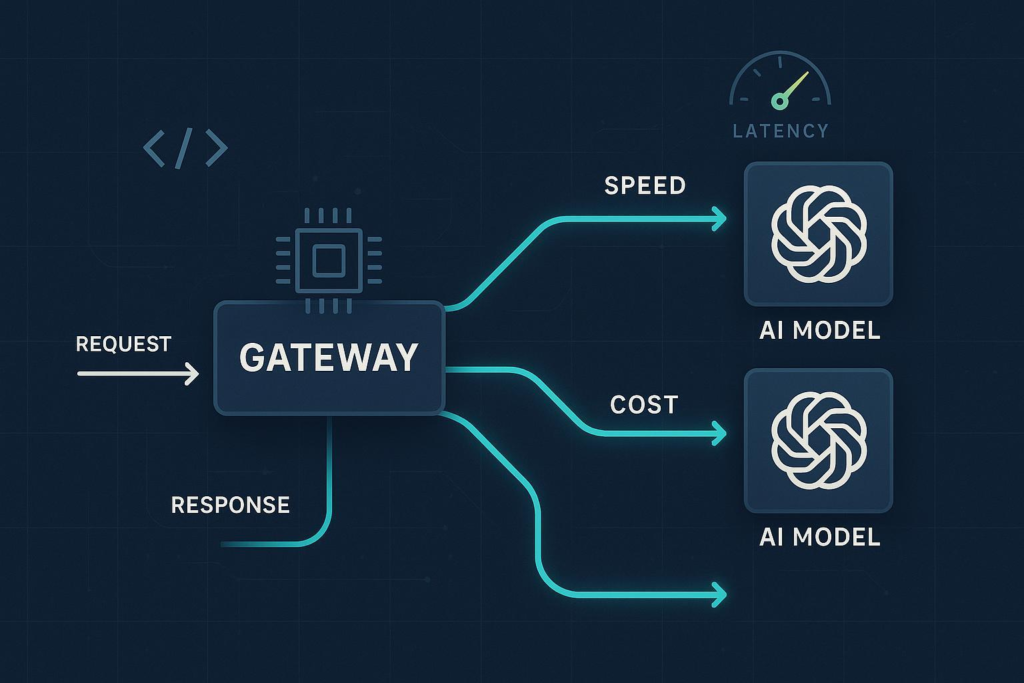
OpenRouter is not an LLM. It does not train models. It is strictly a routing and infrastructure layer. When your application makes a request, here is the architecture of what happens in about 20 milliseconds:
Layer 1: The Request. Your code sends a standard JSON payload (formatted identically to an OpenAI request) to openrouter.ai/api/v1/chat/completions. You specify the model, like "anthropic/claude-3-sonnet".
Layer 2: The Router. OpenRouter’s edge network receives the request. It checks your API key, verifies your credit balance, and evaluates the real-time health of the providers that host the requested model.
Layer 3: The Dispatch. OpenRouter forwards your request to the actual provider (e.g., Anthropic’s servers, or a third-party host like Together AI if you requested an open-source model).
Layer 4: The Normalization. The provider sends the response back to OpenRouter. OpenRouter normalizes the data format to ensure it matches the standard schema, and streams it back to your application.
The “Auto Exacto” Quality Routing (2026 Update)
As the platform evolved, OpenRouter noticed a massive issue: not all API hosts are created equal. If you request an open-source model like Llama 3, there might be five different companies hosting it. Sometimes, cheaper hosts drop tool-calling schemas or have higher latency.
To combat this, OpenRouter introduced Exacto Endpoints. By observing billions of requests, OpenRouter tracks which specific hardware providers have the highest tool-use success rates and the lowest latency. When you enable exacto routing, OpenRouter doesn’t just find the model; it dynamically routes your prompt to the highest-quality physical server hosting that model at that exact second.
4. Pricing: The Zero-Markup Promise vs. BYOK
One of the biggest misconceptions about OpenRouter is that it is a middleman that artificially inflates the price of API calls. This is false. OpenRouter operates on two distinct pricing models:
The Standard Model (Zero Markup)
If you use OpenRouter’s API keys to access commercial models (like OpenAI or Anthropic), you pay the exact same per-token price as you would if you went directly to the provider. OpenRouter passes the cost through with zero markup. They make their money through volume discounts negotiated with the providers, acting as a massive wholesale buyer.
Bring Your Own Key (BYOK)
If you have a special enterprise agreement with OpenAI, or you have massive credit grants from Microsoft Azure, you don’t want to pay OpenRouter for tokens. OpenRouter supports BYOK. You plug your own OpenAI or Anthropic API keys into your OpenRouter dashboard. OpenRouter will route your traffic using your keys, and they charge a nominal flat 5% service fee for acting as the infrastructure layer.
5. Head-to-Head: OpenRouter vs. The Alternatives
OpenRouter isn’t the only gateway in town. Depending on your project’s scale, you might be considering other options. Here is how they stack up in 2026:
Feature
OpenRouter
Vercel AI Gateway
LiteLLM
Primary Use Case
Universal access, model discovery, agentic workflows.
Frontend dev, Next.js integration.
Enterprise internal routing, self-hosted proxy.
Architecture
Managed Cloud Service.
Managed Cloud Service (Vercel ecosystem).
Open-Source (Self-hosted or managed).
Model Catalog
Massive (500+ models).
Curated (Top-tier providers only).
Extensive (Whatever you configure).
Billing
Consolidated (OpenRouter bills you).
Bring Your Own Keys (You pay providers).
Bring Your Own Keys (You pay providers).
Enterprise Data Privacy
Good, but adds a network hop. No VPC options.
Standard cloud privacy.
Excellent (Can run inside your own VPC).
When NOT to use OpenRouter
While OpenRouter is incredible for rapid prototyping, indie hackers, and agentic tools (like bridging Claude Code to DeepSeek), it has limitations in ultra-strict enterprise environments. Because every request routes through OpenRouter’s servers before hitting the LLM, it introduces an extra network hop (adding slight latency). Furthermore, healthcare or finance companies with strict data residency requirements often cannot use a managed cloud proxy and must opt for self-hosted gateways like LiteLLM.
6. How to Integrate OpenRouter (Python Example)
Because OpenRouter is intentionally designed to mimic OpenAI’s API structure, integration takes seconds. Here is how you do it using the standard Python openai SDK:
import os
from openai import OpenAI

# 1. Initialize the client pointing to OpenRouter instead of OpenAI
client = OpenAI(
  base_url="https://openrouter.ai/api/v1",
  api_key=os.getenv("OPENROUTER_API_KEY"),
)

# 2. Make your request using the provider/model syntax
completion = client.chat.completions.create(
  model="google/gemini-2.5-pro", # Easily swap to "anthropic/claude-3-sonnet"
  messages=[
    {"role": "user", "content": "Explain the concept of AI routing."}
  ]
)

print(completion.choices[0].message.content)
Notice the only changes are the base_url and the model naming convention (provider/model-name). The rest of your code—including tools, structured JSON outputs, and message arrays—remains identical.
7. Frequently Asked Questions (FAQs)
Is OpenRouter free to use?
OpenRouter itself does not charge a subscription fee. You pay for the tokens you consume. However, OpenRouter does host several completely free, open-source models (like certain Llama or Mistral variants) supported by the community or ad-hoc providers. You can filter the OpenRouter catalog specifically for “Free” models to experiment without spending a dime.
Does OpenRouter train on my data?
No. OpenRouter acts purely as a passthrough gateway. Their terms of service explicitly state they do not log your prompts or completions for training purposes. However, you are still subject to the data privacy policies of the underlying provider you choose to route to (e.g., if you route to OpenAI, OpenAI’s API privacy policies apply).
Can OpenRouter handle image generation or multimodal inputs?
Yes. OpenRouter supports multimodal models. You can pass base64-encoded images or image URLs to models like GPT-4o or Claude 3.5 Sonnet through the OpenRouter API exactly as you would natively. They also support routing to image generation endpoints.
What happens if a provider changes their API format?
This is OpenRouter’s job to manage. When Anthropic introduces a new way to handle system prompts, or Google changes their tool-calling syntax, OpenRouter’s engineers update their normalization layer. From your perspective, the API remains completely stable and OpenAI-compatible. OpenRouter absorbs the breaking changes so your app doesn’t have to.
The Final Verdict
In the rapidly shifting landscape of 2026, tying your application’s architecture to a single AI provider is a strategic mistake. Models become obsolete in months, and pricing wars are constant. OpenRouter abstracts away the chaos of the AI market, allowing you to treat intelligence as a commoditized utility. Whether you are building an autonomous coding agent, a dynamic chatbot, or a complex multi-step workflow, OpenRouter is the smartest way to future-proof your codebase.
The developer tool ecosystem experienced a seismic shift when Anthropic released Claude Code. By bringing agentic, autonomous AI directly into the terminal, they eliminated the context-switching friction that plagued earlier IDE plugins. However, this power came with a significant catch: you were locked into Anthropic’s proprietary billing and limited strictly to the Claude model family.
For independent developers, boutique agencies, and enterprise teams managing complex AI budgets, vendor lock-in is a liability. That is where OpenRouter enters the equation.
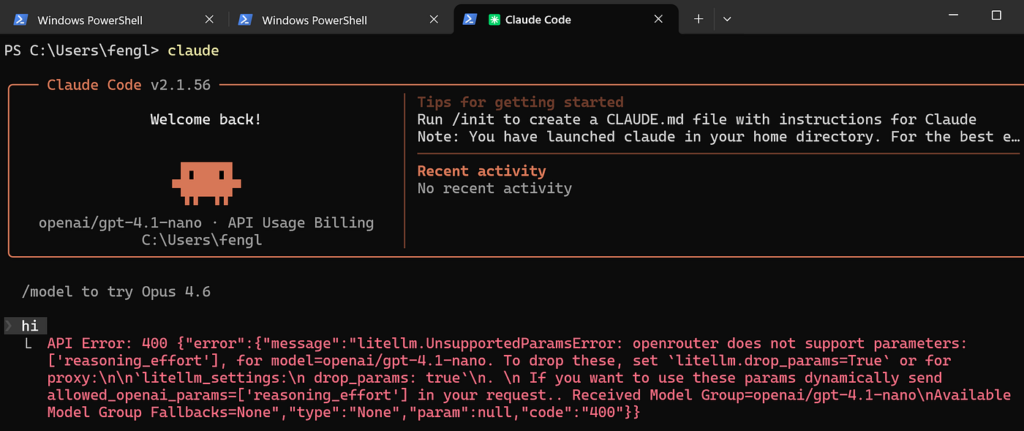
Over the past few months, the developer community has successfully engineered ways to bridge Claude Code’s powerful reasoning engine with OpenRouter’s massive model aggregator. This integration—often referred to as “Model Freedom”—allows you to execute Claude Code workflows using over 300 different LLMs, including Google Gemini, DeepSeek V3, Qwen, and even local open-source models.
In this comprehensive guide, we will break down exactly how this integration works, the different methods to configure it (from native overrides to dedicated proxies like CCORP and Claude Code Router), and which alternative models actually have the reasoning chops to handle agentic coding tasks.
1. Understanding the Baseline: What is Claude Code?
Before diving into the OpenRouter integration, we need to establish why developers are fighting so hard to hack this specific tool. Claude Code is not just another autocomplete wrapper. It is a terminal-native AI agent designed to execute complex, multi-step engineering tasks autonomously.
When you run claude in your terminal, the agent can:
Read your entire local repository architecture.
Execute shell commands (e.g., npm run test or grep).
Edit files natively without requiring manual copy-pasting.
Review Git diffs and author commit messages.
The magic of Claude Code is its execution loop. It relies heavily on tool-calling and structured output to evaluate its own work. Originally, Anthropic optimized this execution loop specifically for Claude 3.7 Sonnet. But as developers quickly realized, the execution loop itself is just software—and if you can point that software to a different brain, the possibilities explode.
2. The Problem: Vendor Lock-In and API Exhaustion
If Claude 3.7 Sonnet is currently the best coding model in the world, why would anyone want to route Claude Code through OpenRouter to use different models? The answers boil down to three massive friction points:
A. Cost and Rate Limits
Agentic coding burns through tokens aggressively. Because Claude Code acts autonomously, a single command like “refactor the authentication flow to use OAuth2” might result in a dozen internal API calls as the agent reads files, writes code, tests the code, reads the error logs, and rewrites the code. Using native Anthropic API keys can drain a developer’s wallet overnight, and hitting the dreaded 429 RESOURCE_EXHAUSTED rate limit mid-task is infuriating.
B. The Need for Specialized Reasoning
While Sonnet is exceptional at general web development, it has blind spots. Sometimes you need the hyper-specialized math and logic capabilities of DeepSeek-R1, or the massive 2-million token context window of Google Gemini 2.5 Pro to digest an entire monolithic legacy codebase.
C. Unified Enterprise Billing
For development teams, managing separate API subscriptions for OpenAI, Anthropic, Google, and Mistral is an accounting nightmare. OpenRouter solves this by acting as a single, centralized gateway. You fund one account, and your team gets access to every model on the market.
3. How OpenRouter Hacks the Claude Code CLI
The integration between Claude Code and OpenRouter relies on intercepting the API calls that the CLI attempts to send to Anthropic’s servers, and redirecting them to OpenRouter’s servers instead. Because OpenRouter features an “Anthropic Skin” (meaning it can accept Anthropic-formatted API requests and translate them on the fly), this redirection is remarkably seamless.
There are currently two primary methods developers use to achieve this in 2026: The Native Environment Override and The Proxy Server (CCR/CCORP).
Method 1: The Native Environment Override (The Easy Way)
Anthropic quietly allowed developers to override the default API endpoint. By leveraging standard environment variables, you can force Claude Code to talk to OpenRouter directly.
Clear your native key: Ensure your ANTHROPIC_API_KEY is explicitly set to an empty string to prevent the CLI from defaulting to Anthropic’s billing.
Set the OpenRouter endpoint: Export ANTHROPIC_BASE_URL=https://openrouter.ai/api.
Inject the OpenRouter Key: Provide your OpenRouter API key as the authorization token.
Note: While simple, this method limits your ability to dynamically switch models mid-session without restarting your terminal, as it relies heavily on OpenRouter’s default routing parameters.
Method 2: Claude Code Router (CCR) & CCORP (The Professional Way)
For power users, the open-source community developed middleware proxies. Tools like CCORP (Claude Code OpenRouter Proxy) and Claude Code Router (CCR) run locally on your machine (e.g., on localhost:3000).
These proxies sit between Claude Code and OpenRouter. You configure Claude Code to point to localhost, and the proxy handles the rest.
Why use a proxy?
Model Aliasing: You can map Claude Code’s internal model requests to completely different models. For example, you can tell the proxy: “Whenever Claude Code asks for ‘claude-3-haiku’, give it ‘qwen-2.5-coder’ via OpenRouter instead.”
Telemetry and Cost Tracking: Using the @openrouter/devtools package, these proxies can spin up a beautiful web UI on localhost:4983, giving you a real-time dashboard of exactly how many tokens your agent is burning per step.
Fallback Logic: If an OpenRouter model goes down, the proxy can automatically fallback to a secondary model without crashing your CLI session.
4. Step-by-Step Setup Guide: Routing via Multi-Claude
If you don’t want to build a proxy from scratch, the easiest, most reliable method in 2026 is using the open-source npm package @leogomide/multi-claude. This tool provides a clean Terminal User Interface (TUI) to manage your connections.
Step 1: Install the CLI Tool
Open your terminal and install the package globally via npm:
npm install -g @leogomide/multi-claude
Step 2: Generate an OpenRouter Key
Navigate to openrouter.ai/keys. Create a new key and name it “Claude Code CLI”. Ensure your OpenRouter account is funded with credits.
Step 3: Launch and Configure
Run the tool in your terminal:
mclaude
This will open an interactive TUI. Use your arrow keys to select “Add Provider”, choose “OpenRouter”, and paste your API key. The tool will automatically validate the key against OpenRouter’s endpoint.
Step 4: Select Your Model and Code
Once configured, mclaude will dynamically fetch the list of available models from OpenRouter. Select the model you want to use (e.g., deepseek/deepseek-v3). The TUI will automatically inject the correct environment variables and seamlessly launch the native Claude Code agent.
5. Which OpenRouter Models Actually Work with Claude Code?
Here is the reality check: Claude Code is highly optimized for Anthropic’s tool-calling syntax. If you route the CLI to a weaker model, the agent will hallucinate, fail to read files properly, or get stuck in infinite execution loops.
Based on extensive community testing on platforms like Reddit’s r/ClaudeCode and r/RooCode, here are the only OpenRouter models you should trust to drive the Claude Code CLI:
High. Excellent at following strict JSON structures.
Exceptional. Often 10x cheaper than native Sonnet.
Google Gemini 2.5 Pro
Massive context ingestion. Analyzing whole repositories at once.
Very High. Seldom drops tool-calling schema.
Moderate. Great alternative when Anthropic is rate-limiting.
Qwen 2.5 Coder (32B)
Fast, iterative front-end tweaks.
Medium. Occasional hiccups on multi-step shell commands.
Incredible. Perfect for basic web dev tasks on a tight budget.
Anthropic Claude 3.7 Sonnet (via OR)
The gold standard. Production-grade agentic workflow.
Perfect. It is the native engine.
Low. You pay premium pricing, but gain OpenRouter’s unified billing.
6. Cost Analysis: Native vs. OpenRouter
Let’s look at why the financial math drives developers to this setup. Assume an average coding session involves the agent reading 50,000 tokens of context and writing 2,000 tokens of code.
Native Claude 3.7 Sonnet: ~$0.15 per input / ~$0.03 per output. Total session cost: ~$0.18.
OpenRouter (DeepSeek V3): ~$0.007 per input / ~$0.005 per output. Total session cost: ~$0.012.
When you multiply that by 50 agentic loops a day, the native route costs nearly $10/day, while the OpenRouter/DeepSeek route costs under $1/day. Over a year, unlocking Model Freedom can save thousands of dollars per developer.
7. Best Practices for OpenRouter Agentic Workflows
If you are going to bypass the native Anthropic guardrails, you need to implement your own discipline to keep the AI from destroying your codebase.
A. Always Use Git Worktrees
Never let a non-native model loose on your main branch. When launching Claude Code via a proxy, use the isolated worktree flag (e.g., mclaude --worktree [name]). This sandboxes the agent’s file edits, allowing you to easily revert if the open-source model hallucinates and deletes your CSS.
B. Watch the Telemetry
If you are using the @openrouter/cli tools, keep the DevTools viewer open in your browser (localhost:4983). Weaker models have a tendency to get “stuck” in a tool-calling loop, repeatedly reading the same file and failing to execute an edit. The DevTools visualizer will show you this immediately, allowing you to hit Ctrl+C before you burn through your API credits.
C. Prime the Context Prompt
When using models like Gemini or Qwen through the Claude Code interface, give them explicit instructions on their first turn: “You are operating within the Claude Code CLI environment. Prioritize precise file reading and strictly adhere to the expected XML/JSON tool schemas.”
The Verdict: The Abstraction of the AI Layer
The integration of OpenRouter with Anthropic’s Claude Code represents a massive maturation in the AI development space. We are moving away from monolithic platforms where the UI and the underlying “brain” are intrinsically tied together.
By forcing Claude Code to accept OpenRouter’s API, developers are taking ownership of their toolchains. They get the absolute best-in-class terminal agent experience (designed by Anthropic), powered by the most cost-effective and task-appropriate intelligence on the market (routed by OpenRouter). If you are coding professionally in 2026, setting up this proxy is no longer a fringe hack—it is a mandatory optimization.
Frequently Asked Questions (FAQs)
Will Anthropic ban my account for using OpenRouter?
No. If you configure the integration correctly, you are not using Anthropic’s API infrastructure or billing at all. You are simply using their open-source CLI interface to send requests to OpenRouter’s servers. Your Anthropic API account remains untouched.
Why do I get an “Authentication Error” when starting the CLI?
This is the most common setup issue. It almost always means your ANTHROPIC_API_KEY environment variable is not totally empty. If the CLI detects even a fragment of a native key, it will attempt to authenticate with Anthropic instead of routing through your proxy to OpenRouter. Ensure you have run export ANTHROPIC_API_KEY="".
Can I still use the new “Extended Thinking” feature?
Yes, but it depends on the model. If you route via OpenRouter to a model that natively supports reasoning tokens (like DeepSeek-R1, or Claude 3.7 Sonnet via OpenRouter’s specific reasoning endpoint), the proxy will pass those reasoning tokens through. Tools like Roo Code and Claude Code Router (CCR) have recently updated their platforms to specifically handle extended thinking traces.
Is OpenRouter safe for proprietary enterprise code?
OpenRouter acts as a passthrough. They state that they do not train on your data, but you are still subject to the data privacy policies of the underlying model provider you route to. If you route to an OpenAI or Anthropic model via OpenRouter, standard zero-retention enterprise API policies generally apply, but you should always verify compliance with your company’s InfoSec team.
If you are still writing raw boilerplate code by hand in 2026, you are bringing a knife to a gunfight. The software engineering landscape has violently fractured over the last eighteen months. We have officially moved past the era of standard autocomplete plugins and entered the age of “agentic orchestration” and “vibe coding.”
Today, your Integrated Development Environment (IDE) is no longer just a text editor; it is a management dashboard for autonomous digital workers. But the market is currently flooded with platforms that claim to do it all. Should you stick with the surgical precision of Cursor? Do you pivot to Google’s wildly ambitious new Antigravity? Or do you surrender absolute control for the rapid-deployment magic of Replit or Lovable?
As a technical journalist who spends more time breaking these tools than praising them, I have spent the last few months migrating real-world web development projects across all four platforms. Here is the unfiltered, hype-free breakdown of the best AI IDEs on the market right now, and exactly which one you should trust with your codebase.
1. Cursor: The Professional’s Surgical Instrument
Let’s start with the incumbent heavyweight. Cursor was the first tool to truly prove that AI could be integrated into a developer’s workflow without feeling like a gimmicky toy. Built as a direct fork of Visual Studio Code (VS Code), its primary selling point is familiarity. Every keybinding, extension, and theme you use in VS Code works flawlessly in Cursor.
How It Actually Feels to Use
Cursor is not built for non-technical founders trying to spin up a weekend startup. It is built for veteran engineers. Its greatest strength is its hyper-aware codebase indexing. When you ask Cursor to refactor a complex authentication flow, it doesn’t just guess; it reads your entire repository, understands the dependency graph, and executes multi-file edits with terrifying accuracy.
The core interaction loops—specifically the Cmd+K inline edit and the persistent Chat sidebar—feel like you are pair-programming with a brilliant, hyperactive senior engineer who has memorized your entire repository. You maintain total architectural control. Cursor doesn’t make major architectural decisions for you; it executes your precise intent.
The Good and The Bad
The Good: Unmatched deep-codebase understanding. Excellent multi-file diff views that let you review AI changes before committing them. Support for top-tier models like Claude 3.5 Sonnet and OpenAI’s latest variants.
The Bad: It still relies on a linear, synchronous chat model. You ask it to do something, you wait for it to finish, and then you review. Furthermore, local indexing on massive enterprise repositories can occasionally chew through your machine’s RAM.
2. Google Antigravity: The Multi-Agent Mission Control
Released in late 2025 alongside the Gemini 3 rollout, Google Antigravity completely rethinking the IDE architecture. Like Cursor, it is a VS Code fork, but the similarities end there. Antigravity shifts the paradigm from “AI as a pair programmer” to “AI as an asynchronous engineering team.”
The “Agent-First” Architecture
When I first booted up Antigravity, the interface felt almost overwhelming. It is bifurcated into two main windows: the standard Editor, and the new Agent Manager. Instead of typing a prompt and watching code generate, you use the Agent Manager to spawn multiple autonomous agents and assign them discrete tasks.
For example, you can deploy Agent A to write unit tests for your backend, Agent B to update your documentation, and Agent C to actuate an integrated headless browser to test your frontend UI—all running simultaneously. This asynchronous execution absolutely crushes the linear limitations of Cursor.
Trust Through “Artifacts”
Google clearly realized that developers don’t trust autonomous AI. To solve this, Antigravity agents don’t just vomit code into your files. They generate “Artifacts”—tangible, verifiable deliverables like implementation plans, architecture diagrams, and browser recordings. Before the agent touches your code, you review its implementation plan. It forces a review surface that actually scales with complex projects.
The Good and The Bad
The Good: Asynchronous task execution is a game-changer for productivity. The integrated Browser Agent can literally click around your staging site to verify UI changes. Native access to Gemini 3.1 Pro and Claude 4.5.
The Bad: The learning curve is steep. Managing multiple agents requires a mental shift from “coding” to “project management.” It also feels heavier than a standard IDE, and the “Agent Decides” permission model requires strict supervision until you trust it.
3. Replit: The Zero-Friction Cloud Powerhouse
If Cursor and Antigravity are heavy artillery, Replit is the tactical airstrike. Replit completely abandons the local desktop environment. It is a cloud-native platform that spins up a full Linux container in your browser in under three seconds. You don’t manage Node versions, you don’t configure Webpack, and you don’t fight with local environment variables.
The Purest “Vibe Coding” Experience
With the introduction of the autonomous Replit Agent, the platform optimized heavily for momentum. You can literally type: “Build me a fintech dashboard that pulls live stock data, use a dark mode UI, and deploy it to a public URL.” The Agent will scaffold the frontend, wire up a database, write the API routes, and give you a live URL in minutes.
This is intoxicating for product managers, non-technical founders, and hackers validating ideas. However, the AI is making hundreds of invisible architectural decisions per second. If the AI hallucinates a weird database schema, you are stuck untangling it.
The Good and The Bad
The Good: Unbeatable zero-to-one speed. Instant cloud hosting and deployment. Perfect for hackathons, learning, and spinning up rapid Minimum Viable Products (MVPs).
The Bad: Once your app scales beyond a basic prototype, the cloud abstraction becomes a liability. Refactoring a massive Replit project is notably harder than doing it locally in Cursor.
4. Lovable: The UI/UX Rapid Prototyping King
Lovable isn’t a traditional IDE; it is a chat-to-app generation platform that specifically targets the frontend gap left by other tools. If you are building visually rich web applications, internal SaaS tools, or complex dashboards, Lovable is currently operating in a league of its own.
The Design-First Abstraction
Lovable forces you into a highly opinionated stack: usually React, Tailwind CSS, and Supabase for the backend. By restricting the technology choices, the AI is able to generate exceptionally polished, production-ready user interfaces. You can even import a Figma design directly into Lovable, and the AI will translate it into a functional, interactive web app in seconds.
What makes Lovable viable for serious work—and not just a toy—is its bi-directional GitHub sync. You can generate the baseline UI in Lovable, push the repository to GitHub, pull it down into Cursor to write complex custom backend logic, and push it back.
The Good and The Bad
The Good: Flawless UI generation. Direct Figma-to-code integration. Seamless Supabase integration for instant database and authentication setup.
The Bad: You are locked into their specific tech stack. It struggles with highly complex backend logic, often getting caught in infinite debugging loops when forced outside its frontend comfort zone.
Head-to-Head Comparison Table
To make the decision simpler, here is how the top four platforms stack up against each other across critical development metrics.
Feature / Metric
Cursor
Google Antigravity
Replit
Lovable
Primary Use Case
Professional, large-scale codebase engineering
Multi-agent asynchronous orchestration
Instant full-stack MVPs and cloud hosting
High-fidelity UI prototyping & internal tools
Environment
Local Desktop App (VS Code Fork)
Local Desktop App (VS Code Fork)
Cloud-Based (Browser)
Cloud-Based (Browser)
Required Tech Skill
High (Requires coding knowledge)
High (Requires architectural oversight)
Low to Medium
Low (Chat-based interface)
Key Differentiator
Best multi-file edit and deep context indexing
Parallel execution via Agent Manager & Artifacts
Zero setup, instant live deployment URLs
Figma-to-code import, bi-directional GitHub sync
Best Supported Stack
Framework Agnostic
Framework Agnostic
Python, JS/TS Web Stacks
React, Tailwind, Supabase
The Verdict: Which IDE Should You Actually Use?
Choosing the “best” tool in 2026 is entirely dependent on your current technical skill and your immediate business goal. Do not fall into the trap of thinking one tool rules them all. Here is the reality of how you should allocate your time:
If you are a Senior Engineer maintaining a production legacy codebase: Use Cursor. You need strict control, local execution, and an AI that acts as a subordinate assistant rather than an autonomous cowboy. Cursor remains the most reliable tool for refactoring thousands of lines of code without breaking your production environment.
If you are an Architect managing complex, multi-step workflows: Use Google Antigravity. If you are tired of waiting for your AI to finish generating a test suite before you can ask it a new question, Antigravity’s asynchronous agent manager will double your throughput. It is the tool of the future, even if the learning curve is steep today.
If you are a Founder or Product Manager testing an idea: Use Replit. Momentum is your only metric. You need a working prototype with a live URL to show investors or customers by Monday morning. Replit will get you there faster than anything else on the market.
If you are a Designer or Frontend Developer: Use Lovable. If your primary concern is pixel-perfect UI, animations, and instantly wiring up a mock database via Supabase, Lovable’s restrictive but high-quality React output cannot be beaten.
The most dangerous thing you can do right now is become religiously attached to a single platform. The best developers in 2026 are using Lovable to generate their UI components, syncing it to GitHub, and pulling it down into Cursor or Antigravity to wire up the complex business logic. The modern stack is modular.
Frequently Asked Questions (FAQs)
What is the difference between “vibe coding” and traditional AI assistance?
Traditional AI assistance (like early GitHub Copilot) relies on autocompleting lines of code as you type. “Vibe coding,” a term popularized by platforms like Replit and Lovable, refers to using natural language prompts to dictate an application’s behavior and layout, allowing the AI agent to autonomously write, deploy, and host the code entirely in the background without the user needing to understand syntax.
Can I migrate a Lovable project to Cursor later?
Yes, absolutely. This is one of Lovable’s strongest features. Because Lovable generates standard React and Tailwind code and features a bi-directional GitHub sync, you can easily push your Lovable project to a repository, clone it to your local machine, and open it in Cursor or Google Antigravity for heavy backend modification.
Is Google Antigravity just a clone of Cursor?
No. While both are built on the open-source Visual Studio Code foundation, their architectures are fundamentally different. Cursor focuses on deep codebase context and synchronous inline edits. Antigravity introduces an “Agent-First” paradigm, featuring an Agent Manager that allows you to deploy multiple asynchronous AI agents to work on different parts of your project simultaneously, heavily utilizing Google’s Gemini 3 models.
Are cloud IDEs like Replit safe for enterprise code?
While Replit offers enterprise-grade security and SOC 2 compliance for its business tiers, many highly regulated industries (like healthcare or finance) still mandate that source code reside on local machines or internal VPNs. In those strict enterprise environments, local IDEs like Cursor or Antigravity, configured with privacy-respecting API endpoints, are the required standard.
Anthropic, the San Francisco-based AI safety and research lab behind the Claude models, has quietly emerged as the most fiercely competitive employer in the technology sector. Offering remote base salaries that regularly exceed $500,000, the company is attracting top-tier engineering, research, and policy talent. However, securing a job at Anthropic requires surviving a grueling, deeply psychological interview process designed to weed out anyone not wholly committed to the company’s core mission: ensuring artificial intelligence does not destroy humanity.
As the artificial intelligence arms race accelerates through 2026, the labor market for top-tier machine learning engineers and AI researchers has fractured. While legacy tech giants like Google and Meta attempt to retain talent with massive equity grants, and OpenAI relies heavily on a rapid, referral-based hiring network, Anthropic is taking a markedly different approach. They are building a workforce that operates less like a traditional software startup and more like a high-stakes scientific research facility with a strict moral compass.
If you are looking to land a role at the company pioneering “Constitutional AI,” technical brilliance is simply the baseline requirement. What Anthropic is truly searching for is emotional competence, a deep skepticism of unchecked technological scaling, and an unwavering commitment to safety.
The 2026 Hiring Landscape: What Roles is Anthropic Filling?
Anthropic’s hiring strategy in 2026 reflects its maturity. The company is no longer just a scrappy research lab; it is a global enterprise deploying enterprise-grade APIs and consumer products while actively consulting with international governments. Consequently, their job openings span a wide array of disciplines.
1. Core Research and Engineering
The backbone of the company remains its technical staff. Interestingly, Anthropic explicitly states on its careers page that they “care about what you can do, not where you learned to do it.” Roughly half of their technical staff had no prior machine learning experience before joining, and many lack advanced degrees, though PhDs from top-tier institutions are common. Roles in this bracket include:
Research Engineers (Pre-training, Universes, Reward Models): Tasked with the foundational mathematics and architecture of next-generation LLMs.
Staff Machine Learning Engineers (Agent Skills): Focused on making Claude capable of taking autonomous, multi-step actions on behalf of users.
Infrastructure and Systems Engineers: Tasked with managing the massive, distributed GPU clusters required to train and run inference for frontier models.
2. Security and Red Teaming
Given their safety mandate, Anthropic heavily recruits for “Frontier Risk.” This includes Staff Red Team Engineers and Threat Intelligence Leads whose sole job is to try and break the models—tricking Claude into generating harmful code, revealing private data, or assisting in biological weapons creation—so those vulnerabilities can be patched before public release.
3. Policy, Operations, and the “Anthropic Institute”
With the recent launch of the Anthropic Institute, led by co-founder Jack Clark, the company is aggressively hiring non-technical talent. They are bringing on Geopolitics Analysts, Technical Policy Managers for Cyber Harms, and Solutions Architects for their “Beneficial Deployments” team, which partners with nonprofits to deploy AI in global health and education.
The Compensation: How Much Does Anthropic Actually Pay?
To pull top talent away from competitors, Anthropic offers astronomical compensation packages. According to recent 2026 remote salary data and hiring listings, the company’s base pay sits at the absolute top of the market. Crucially, these figures represent base salary only; total compensation, including equity and bonuses, can easily push annual earnings past the seven-figure mark for senior roles.
Job Title
2026 Remote Base Salary Range (USD)
Research Engineer, Universes
$500,000 – $850,000
Director of UI Engineering
$485,000 – $625,000
Staff Machine Learning Engineer
$340,000 – $560,000
Threat Collections Engineer
$300,000 – $405,000
Geopolitics Analyst, Policy
$265,000 – $295,000
Security Development Project Specialist
$220,000 – $275,000
The company also offers a robust benefits package, including 22 weeks of paid parental leave, fully covered health premiums, and unique perks like optional equity donation matching (up to 25% of an employee’s equity grant).
Inside the Anthropic Interview Process: A 6-Step Gauntlet
Anthropic’s interview process is notoriously exhaustive. It is designed to be rigorous, taking anywhere from three to six weeks, and is heavily scrutinized by internal “shadow interviewers” who ensure the hiring bar remains consistently high.
Step 1: The Recruiter Screen (30 Minutes)
Unlike standard tech interviews where the recruiter simply checks your salary expectations and tech stack, Anthropic recruiters immediately probe for mission alignment. Candidates are asked point-blank: “Why Anthropic specifically?” Generic answers about “loving AI” will result in a quick rejection. Successful candidates must reference specific Anthropic research papers (like their work on Latent Knowledge), policy documents (like the Responsible Scaling Policy), or their specific approach to interpretability.
Step 2: The Skills Assessment (90 Minutes)
For technical roles, candidates are sent a timed CodeSignal assessment. This is an automated hurdle to ensure baseline coding competency before human engineers invest time in the candidate.
Step 3: The Hiring Manager Screen (60 Minutes)
This round dives into past projects, focusing on scale and impact. The manager is looking for evidence that the candidate can handle ambiguity and drive projects independently.
Step 4: The Technical & System Design Loops (Multiple 55-Minute Rounds)
This is where the technical rigor peaks. A defining characteristic of Anthropic’s system design interviews is that they often strip away the “AI magic.” Interviewers treat the language model as a black box and ask candidates to solve pure, brutal infrastructure problems.
“The questions use AI framing, but the core problem is classic infrastructure. You’ll hear terms like ‘GPU cluster,’ ‘inference batch,’ or ‘model binary.’ Your job is to design the system around it: queuing, batching, routing, error handling, and scale.” – Recent Candidate Report
A classic 2026 prompt asks candidates to design an inference batching system for a single GPU that can process 100 inputs per batch, handling synchronous user requests while optimizing for both latency and throughput. At the staff level, interviewers provide zero guidance; the candidate is expected to entirely drive the architectural discussion.
Step 5: The “Therapy Session” (The Values & Culture Interview)
This is the round where most highly qualified technical candidates fail. Conducted by senior staff, the culture interview is often described by candidates as feeling like a “therapy session.”
Interviewers probe deeply into a candidate’s emotional competence, self-awareness, and ethical boundaries. They are not looking for blind enthusiasm or “Kool-Aid drinkers.” In fact, Anthropic values skepticism. Candidates are expected to thoughtfully push back on the company’s own premises.
Common questions include:
Tell me about a time you had to build something that created a moral dilemma for you. (They want serious examples, not trivial complaints about button colors).
Tell me about a time you had a solution but it turned out to be entirely wrong. How did you feel then, and how do you feel about it now?
What is your critique of Anthropic’s current mission or safety policies?
Step 6: Exhaustive Reference Checks
Unlike competitors who rely on internal referrals, Anthropic conducts meticulous external reference checks from day one, contacting former colleagues and bosses to verify a candidate’s collaborative nature and ethical track record.
The Work Culture: “Oppenheimer” Complexes and 50-Hour Weeks
What is it actually like to work inside Anthropic once you clear the gauntlet? According to insider reports, employee reviews, and industry analysts in 2026, the culture is a paradox: it is highly collaborative and deeply respectful, yet intensely high-pressure.
The Reality of the Workload: Employees frequently report working 50+ hour weeks. The environment is described as “intense,” with significant burnout risks during major model training and release cycles. Management has openly stated to staff that the years between 2026 and 2030 will dictate the future of human history, creating an environment where the stakes feel existentially high.
The Vibe: Employees describe their colleagues as genuinely kind, brilliant, and mission-aligned. However, the concentration of elite talent also breeds massive egos. One recent candidate noted on a public forum that their interviewer “literally compared himself to J. Robert Oppenheimer.”
Scaling Friction: As the company has ballooned in size, employees report growing pains. There is a persistent, underlying tension between the company’s pure safety research origins and the increasing pressure to commercialize products and secure enterprise contracts. Maintaining their position as the “superego of the AI sector” while fighting a bare-knuckle market share war against OpenAI is a constant balancing act.
The Irony: Anthropic’s Own Research on the AI Labor Market
Interestingly, while Anthropic is hiring aggressively, they are acutely aware of how their products are impacting the broader labor market. In March 2026, the company released a comprehensive labor impact study revealing that customer service representatives and computer programmers are currently the occupations most exposed to AI automation.
While the company noted that mass unemployment has not yet materialized, their internal data suggests that hiring into highly exposed roles is already beginning to slow down. As Anthropic continues to hire top-tier talent to build smarter AI, they are simultaneously authoring the research tracking how those very models are displacing traditional jobs—a duality that perfectly encapsulates the complex ethical position the company occupies.
Frequently Asked Questions (FAQs)
Does Anthropic hire people without a background in Artificial Intelligence?
Yes. Anthropic states that roughly half of their technical staff had no prior machine learning experience before joining. They prioritize raw engineering capability, problem-solving skills, and the ability to learn complex distributed systems quickly over a specific background in LLMs. However, a deep, demonstrable passion for AI safety is mandatory.
Are Anthropic jobs fully remote?
Anthropic operates on a location-based hybrid model. As of 2026, the company expects all staff to be in one of their physical offices (such as their San Francisco headquarters) at least 25% of the time, though many specific roles require a much heavier in-office presence. Fully remote roles exist but are generally tied to specific geographic restrictions or exceptional talent circumstances.
Does Anthropic sponsor work visas?
Yes, Anthropic does sponsor visas for international candidates. While they cannot guarantee successful sponsorship for every single role, they retain dedicated immigration lawyers and state that they will make “every reasonable effort” to secure a visa for a candidate they have extended an offer to.
What is the hardest part of the Anthropic interview?
While the system design rounds are technically grueling, recruiters and past candidates consistently highlight the “Company Values” interview as the hardest stage. It requires high emotional intelligence, the ability to articulate complex moral dilemmas, and the confidence to display intellectual skepticism rather than just telling the interviewers what they want to hear.
How does Anthropic’s compensation compare to OpenAI or Google?
Anthropic’s compensation is firmly at the top of the market, effectively matching or slightly exceeding base salaries at major tech conglomerates. While Google may offer more predictable liquid stock, Anthropic’s equity packages offer massive upside potential, positioning their total compensation aggressively to win talent wars against OpenAI and Meta.
The Bottom Line
Securing a job at Anthropic in 2026 is less about proving you are the smartest coder in the room, and more about proving you can shoulder the existential weight of what you are building. For those who pass the test, the financial rewards are life-changing, but the intellectual and emotional demands are relentless.
In a major shift for higher education in India, the Scaler School of Technology (SST) has officially launched a four-year, fully residential undergraduate (UG) program in Artificial Intelligence and Business. Located at their Bangalore campus, this interdisciplinary degree is explicitly designed to groom the next generation of tech entrepreneurs, product leaders, and innovators. By seamlessly blending rigorous computer science engineering with commercial strategy, Scaler is challenging the traditional boundaries that have long separated technology from business management.
The core philosophy driving this new initiative is that the era of artificial intelligence requires a new breed of professionals. Today, building a digital product does not require massive teams of developers and years of coding. AI tools have exponentially lowered the barrier to entry, allowing individuals to prototype and launch functional software in a matter of weeks. What dictates success in the modern digital economy is no longer just the ability to write code, but the capacity to identify pressing market problems, design sustainable solutions, and strategically scale a business around those solutions.
The Great Divide: Engineering vs. Business Schools
For decades, the higher education system has forced students into a rigid binary choice. If a student chooses an engineering school, they spend four years learning how to build complex systems, write algorithms, and manage databases. However, they graduate with little to no understanding of how to run a business, acquire users, or manage a profit and loss statement. They learn to build what someone else defines.
Conversely, students who attend business schools learn about market strategies, finance, operational efficiency, and organizational behavior. Yet, they lack the technical capability to actually build the products they are strategizing about. This disconnect often leads to friction in the corporate world, where technical teams and business teams speak entirely different languages.
The Scaler UG program in AI and Business eliminates this compromise entirely. It operates on the premise that the future belongs to those who can do both. Much like the modern entrepreneurial methodologies discussed when building founder-centric digital experiences, this program emphasizes a unified vision. A successful founder must have an intimate understanding of both the granular technical details of their product and the overarching market dynamics that will allow it to thrive.
A Deep Dive into the 4-Year “Build-First” Curriculum
Unlike traditional academic environments that rely heavily on theoretical lectures, exams, and rote memorization, Scaler’s approach is fundamentally hands-on. The curriculum is co-developed with over 100 industry leaders and is updated every six months to keep pace with the rapidly evolving tech landscape. Students will complete more than 50 real-world projects over their four years.
Year 1: Think and Build
The foundational year is designed to build core competencies across both domains. Students do not start with abstract business theories; they start by getting their hands dirty. The coursework covers programming fundamentals, data structures, applied mathematics for AI, economics, and structured communication.
Crucially, the learning is applied immediately through projects. First-year students are tasked with building interactive AI games (like an intelligent Tic-Tac-Toe), designing scalable database schemas for hypothetical apps like Amazon or MakeMyTrip, and creating tech-enabled e-commerce challenges. This ensures that the theoretical mathematics and coding principles are instantly grounded in real-world utility.
Year 2: Build Products That Scale
As students progress into their second year, the complexity increases significantly. The focus shifts from basic programming to production-grade systems. Students delve into AI model development, natural language processing, data pipelines, and the architecture required to support millions of users. Simultaneously, they begin learning go-to-market (GTM) fundamentals. It is not enough to build an AI tool; students must learn how to position it, market it, and understand user acquisition metrics.
Year 3: Solve Problems That Matter
The third year acts as a bridge between the classroom and the boardroom. The focus pivots sharply toward product strategy, growth levers, and navigating real-world constraints. Students spend significant time in the Scaler Innovation Lab, an incubator setting where they often work alongside early-stage startups.
This exposure is critical. By analyzing the competitive landscapes of emerging tech, tracking funding rounds on platforms like Crunchbase, and observing how actual founders pivot and adapt to market feedback, students gain an invaluable, unvarnished look at the realities of the startup ecosystem.
Year 4: Founder Mode
The capstone of the Scaler AI and Business program is its fourth year, intensely focused on what the institution calls “Founder Mode.” This is where the program truly separates itself from any other undergraduate degree in the country. Startup building is not an optional extracurricular activity or an after-school club; it is a mandatory academic requirement.
Every single student must conceptualize a business idea, build an AI-native Minimum Viable Product (MVP), and attempt to scale it. The goal is to take the venture from a mere idea to early traction and, ideally, initial revenue. The institution provides the necessary infrastructure, mentorship, and even access to a dedicated pre-seed capital pool of over ₹2 Crores to fund these student-led ventures.
Mentorship from the Top 1% of the Industry
A curriculum is only as good as the people teaching it. Scaler School of Technology boasts a faculty and mentorship roster comprising leaders who have built billion-dollar products. Students receive direct, 1:1 mentorship from founders, operators, and engineers from frontier tech companies like OpenAI, Meta, Google, NVIDIA, and McKinsey.
Having access to the minds behind platforms like ChatGPT 3.5 or Facebook Messenger provides students with insights that simply cannot be found in textbooks. Furthermore, fostering a mindset of continuous learning is heavily encouraged. Students are taught to seek inspiration and knowledge from a variety of sources, whether that means studying the visionary talks of global leaders through their TED profiles or mapping out creative brand identities and user experience visions using visual discovery engines like Pinterest.
Early Signals of Impact: Real Startups, Real Funding
Though the AI and Business program is newly formalized as a specific degree pathway, the ethos of building startups has already been tested within the Scaler ecosystem. The outcomes have been remarkable.
For example, NeoSapiens, a startup incubated at the Scaler Innovation Lab, successfully secured funding on the national television show Shark Tank India for building an AI-native wearable device. Another student venture, Percevia, won first place among 20,000 entries at the ‘Samsung Solve for Tomorrow’ competition by building AI-powered glasses designed to assist the visually impaired. These are not hypothetical business case studies; these are real teenagers building hardware and software that impacts lives and attracts venture capital.
The Ultimate Safety Net: Deferred Placements
One of the most significant barriers to entrepreneurship, particularly for young graduates, is the fear of failure and the associated financial risk. Scaler addresses this directly by designing the program with ambition and a built-in safety net.
If a student spends their fourth year building a startup but decides post-graduation that they do not want to continue running it—whether because the business failed to find a market fit, or they simply realized the founder lifestyle isn’t for them—they are not left out in the cold. Scaler provides deferred placement support.
These students can easily pivot into high-impact industry roles. Thanks to their rigorous technical and business training, they are highly sought after for positions such as AI Product Managers, AI Engineers, Strategy Consultants, or roles within a Founder’s Office. Scaler leverages its massive network of over 1,200 hiring partners, including MAANG companies and top-tier startups, to ensure graduates have lucrative traditional career pathways available to them.
Admissions, Cohort Exclusivity, and Campus Life
Scaler School of Technology operates a highly selective admissions process. For the inaugural cohort of the AI and Business program, the intake is strictly capped at 200 students. This ensures a low student-to-mentor ratio and fosters a highly concentrated environment of ambitious peers.
The admissions process is holistic. It begins with the National Scaler Entrance Test (NSET), which evaluates aptitude and logical reasoning. This is followed by two rounds of interviews: an AI-led interview assessing program fit, and an industry-led interview focused on evaluating the candidate’s curiosity, problem-solving ability, and genuine ambition for startup building.
The fully residential urban campus in Bangalore places students in the heart of India’s Silicon Valley. The environment is designed to be immersive, featuring 24/7 access to the Innovation Lab (equipped with 3D printers, robotics, and AR/VR tech), hackathons, industry networking events, and a vibrant student-driven culture that includes sports, music, and debate clubs.
Frequently Asked Questions (FAQs)
1. What is the eligibility criteria for the Scaler AI and Business UG Program?
Applicants must be under the age of 20 as of July 1 of the admission year. They must have completed their Class XII exams (or be appearing for them) from a recognized board, and must have secured a minimum of 60% in Mathematics. The program is open to students from all streams, including Science, Commerce, and Arts.
2. How is this program different from a standard B.Tech or BBA?
A standard B.Tech focuses purely on technical engineering without business application, while a BBA focuses on management without teaching you how to code or build software. Scaler’s AI and Business program forces you to master both simultaneously, with a mandatory requirement to build a real AI startup in your final year.
3. Is it mandatory to build a startup in the fourth year?
Yes, entering “Founder Mode” and attempting to build and scale an AI-driven startup is a core academic requirement for the fourth year of this specific program.
4. What happens if my startup fails?
Scaler offers a robust safety net. If your startup does not succeed, or if you choose not to pursue it after graduation, you retain access to Scaler’s deferred placement support. With a network of over 1,200 hiring partners, graduates can easily transition into lucrative roles like AI Product Manager or Software Engineer.
5. Does Scaler provide funding for the student startups?
Yes, Scaler School of Technology has earmarked a dedicated seed fund pool of over ₹2 Crores to support and invest in promising student-led ventures developed during the program.
6. Where is the campus located?
The program is fully residential and is located at Scaler’s state-of-the-art urban campus in Electronic City, Bangalore, placing students right in the center of India’s primary tech and startup hub.
7. Are there scholarships available?
Yes, Scaler offers both merit-based and need-based scholarships. Merit scholarships are based on performance in entrance exams (like NSET, JEE, or SAT), while need-based scholarships are available for students demonstrating genuine financial constraints (family income below ₹5 LPA).
Conclusion: A Paradigm Shift in Tech Education
The launch of the Scaler UG program in AI and Business marks a pivotal moment in how we educate the next generation of innovators. By acknowledging that the future of commerce is intrinsically linked to artificial intelligence, and that the future of technology requires sound business fundamentals, Scaler is creating a blueprint for the modern founder.
For high school graduates who have ever dreamed of building the next disruptive tech giant, the traditional path of a pure engineering or pure business degree is becoming obsolete. The AI era demands interdisciplinary mastery. By providing the curriculum, the mentorship, the funding, and the safety net, Scaler School of Technology is not just teaching students about the future; it is actively funding them to build it.
Artificial intelligence is rapidly transforming the way developers write software, and one AI-powered coding tool gaining massive attention is Cursor. The AI code editor, developed by Anysphere, has quickly become popular among developers because of its ability to understand codebases, generate functions, and assist with debugging directly inside the editor.
Recently, students across India have started discovering ways to access Cursor Pro for free for up to one year through student programs and developer education initiatives. The offer is particularly valuable for computer science students, software engineers in training, and anyone learning programming who wants to leverage AI while coding.
What Is Cursor AI?
Cursor AI is an AI-powered code editor designed to integrate artificial intelligence deeply into the software development workflow. Unlike traditional code editors, Cursor allows developers to ask questions about their code, generate new files, refactor existing code, and even understand entire repositories with natural language commands.
The tool has gained popularity because it feels like coding alongside an AI assistant that understands the entire project context.
Why Students Are Interested in Cursor
For students learning programming, AI-powered tools can dramatically accelerate the learning process. Instead of spending hours debugging or searching through documentation, students can ask the AI assistant to explain errors, suggest improvements, or even generate working code examples.
This creates a strong psychological benefit: students experience faster progress and immediate feedback, which encourages deeper experimentation and learning.
Many developers also see Cursor as a more integrated alternative to traditional AI coding assistants, since the AI operates directly inside the editor rather than as a separate chatbot.
How Indian Students Can Get Cursor Free for One Year
Students in India may be able to access Cursor Pro through student verification programs or developer education packs that provide premium tools to learners.
One of the most popular programs offering developer tools for students is the GitHub Student Developer Pack, which includes free access to many professional tools used by developers worldwide.
Students who qualify for these programs often receive premium software subscriptions, cloud credits, and coding tools that help them build real-world projects while studying.
The Growing Competition in AI Coding Tools
The rise of AI coding assistants has created intense competition among developer platforms. Tools that help programmers write code faster are becoming essential in modern development workflows.
AI-powered editors like Cursor are part of a new generation of development environments that combine traditional coding interfaces with advanced language models capable of understanding complex programming tasks.
Why Companies Offer Free Tools to Students
Providing free access to powerful tools for students is also a strategic move by technology companies. When students adopt a platform during their education, they often continue using it when they enter the professional workforce.
This early exposure builds familiarity and loyalty, turning students into long-term users and advocates of the technology.
The Future of AI-Assisted Development
As AI continues to evolve, tools like Cursor could redefine how software is built. Instead of writing every line of code manually, developers may increasingly collaborate with AI systems that help design, debug, and optimize applications.
For students in India looking to build careers in software development, gaining experience with AI-powered coding tools today could provide a significant advantage in the future job market.
Students interested in exploring the tool can visit the official website here: https://cursor.sh
Artificial intelligence is rapidly transforming the education landscape, and one of the most talked-about developments in recent months is the growing availability of Claude AI for students. The AI assistant developed by Anthropic is gaining traction among students and researchers as companies compete to make advanced AI tools accessible to younger users and academic institutions.
Recent announcements from Anthropic indicate that several advanced capabilities of Claude are now accessible even on the free tier. These include file creation, integrations with tools like Notion and Google Drive, and the ability to generate documents such as spreadsheets and presentations directly through the AI assistant. According to reports, these features were previously limited to paid subscriptions but are now available to free users. Read more about the update.
Why Students Are Adopting Claude AI Rapidly
Students today face increasing academic pressure while navigating a rapidly evolving digital landscape. AI tools like Claude provide a way to reduce cognitive load and accelerate learning. Instead of spending hours researching complex topics, students can use AI assistants to summarize articles, explain difficult concepts, and generate structured notes.
Anthropic has also introduced initiatives like Claude for Education, a specialized program designed to integrate AI into universities and classrooms. This initiative includes a learning mode that helps students understand reasoning processes rather than simply providing answers.
Universities including Northeastern University and the London School of Economics have already partnered with Anthropic to make Claude available to thousands of students across campuses.
The Psychology Behind Free AI Tools for Students
From a behavioral perspective, offering advanced AI tools for free to students is a powerful strategy. When students adopt a technology early in their academic journey, they often continue using it in their professional careers.
This phenomenon is known as habit formation through early exposure. By introducing students to AI tools like Claude during their learning years, companies can build long-term user loyalty.
Many students also experience a strong psychological reward when AI tools help them complete tasks faster or understand difficult subjects more easily. This sense of productivity and achievement reinforces continued usage.
Free AI Courses and Certifications
Anthropic has further expanded its education initiative by launching free training programs and certifications for learners interested in AI. These courses aim to teach practical AI skills ranging from basic AI literacy to advanced development workflows.
Students can access structured learning tracks through Anthropic’s training platform and earn certificates demonstrating their AI proficiency. Learn about the free AI courses here.
Competition in the AI Education Market
The move to make AI tools available for students is part of a larger industry trend. Major AI companies are racing to capture the education market as universities increasingly integrate artificial intelligence into research and coursework.
By providing students with free access to powerful AI assistants, companies are effectively investing in the future workforce that will rely on these technologies.
The Future of AI in Education
Experts believe AI tools like Claude could fundamentally reshape how students learn and interact with knowledge. Instead of relying solely on textbooks or static lectures, students may increasingly use AI systems to explore ideas, simulate experiments, and develop projects.
As AI continues to evolve, platforms like Claude may become an essential companion for students, researchers, and professionals alike.
For those interested in exploring Claude AI, the official platform can be accessed here: https://claude.ai